
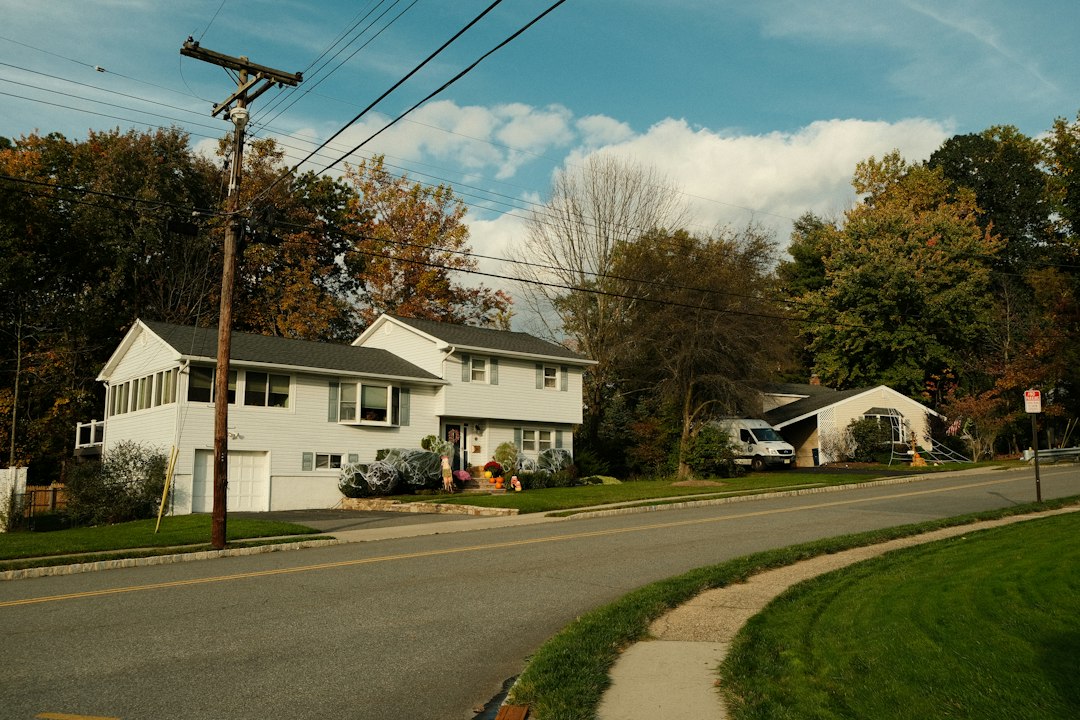
The New Jersey foreclosure process is judicial: the lender must sue in the Superior Court, win a final judgment, and then have the county sheriff sell the property at auction. Because every step runs through the courts and state law adds notice, mediation, adjournment, and redemption rights, New Jersey foreclosures move slowly, which gives investors a long window to reach owners before a sheriff’s sale. Next door, the timeline runs even longer; see our guide to the New York foreclosure process for how its referee system differs.
This guide breaks the process into stages, shows where an investor can help an owner at each one, explains the 2024 law that changed who gets priority at sheriff’s sales, and covers the risks of buying at auction in New Jersey.
New Jersey foreclosure at a glance
| Stage | Key rule | Source |
|---|---|---|
| Pre-filing | Federal servicing rules generally bar a first filing until a loan is more than 120 days delinquent | 12 CFR 1024.41(f) |
| Notice of Intention to Foreclose | Sent at least 30 and no more than 180 days before the complaint; owner gets 30 days to cure | Fair Foreclosure Act |
| Complaint and answer | Filed with the Superior Court’s Office of Foreclosure; 35 days to answer | Court rules |
| Mediation | Homeowner requests within 60 days of the complaint | N.J.S.A. 2A:50-77 |
| Final judgment and writ | Lender requests final judgment; court issues a writ of execution | Fair Foreclosure Act |
| Sheriff’s sale | Generally within 150 days of the sheriff receiving the writ; limited adjournments | N.J.S.A. 2A:50-64; 2A:17-36 |
| After the sale | 10 days to object or redeem; deficiency suit must be filed within 3 months | Court Rule 4:65-5; N.J.S.A. 2A:50-2 |
The summary above draws on Nolo’s New Jersey foreclosure overview (updated May 2024) and the county sheriff rules cited below. Always confirm current deadlines with the court and the county sheriff, because local practices and statutes change.
Stage 1: Missed payments and the 120-day window
Under federal mortgage servicing rules in Regulation X, a servicer generally cannot make the first foreclosure filing until the borrower is more than 120 days delinquent. During this period the servicer sends late notices and loss-mitigation information, but nothing appears in court records yet.
For investors, this stage is mostly invisible. Owners in this window are reached through general marketing, referrals, and lists that flag financial stress rather than through foreclosure filings.
Stage 2: The Notice of Intention to Foreclose
New Jersey’s Fair Foreclosure Act requires the lender to mail a Notice of Intention to Foreclose by registered or certified mail at least 30 days, and no more than 180 days, before filing the complaint. The notice states the default, the amount needed to cure, the deadline, and information about counseling and mediation. The homeowner can reinstate by paying the past-due amount within the cure period.
This notice is mailed, not recorded, so it is not a public lead source. But it is often the first moment an owner realizes the situation is serious, and owners who call investors at this point have the most options: reinstatement, a loan modification, a sale with equity, or a short sale.
Stage 3: The complaint, lis pendens, and answer
The lender files a foreclosure complaint with the Office of Foreclosure, part of the Superior Court. Lenders also typically record a lis pendens, a public notice that the property is subject to litigation. The homeowner must be served, usually in person, and has 35 days to file an answer.
- An uncontested case stays with the Office of Foreclosure and moves toward default and final judgment.
- A contested case, where the owner raises a real defense, goes to a judge in the county where the property sits and can take much longer.
The complaint and lis pendens are public, which is why pre-foreclosure lists in New Jersey usually start here. Our guide to pre-foreclosure leads covers how to build and work those lists.
Stage 4: Foreclosure mediation
New Jersey runs a foreclosure mediation program, made permanent in 2019. Homeowners can request mediation within 60 days of receiving the complaint. Mediation brings the borrower and lender together with a neutral mediator to look for alternatives such as a modification or a short sale, but it does not automatically stop the case.
Investors should know whether an owner is in mediation. An owner negotiating a modification may not be ready to talk about a sale, and an owner whose mediation failed often is.
Stage 5: Final judgment and the writ of execution
If there is no answer, or the court rules for the lender, the lender moves for final judgment. Before requesting it, the lender must send a notice giving the owner a last opportunity to cure, with set response and cure deadlines under N.J.S.A. 2A:50-58. Under the Fair Foreclosure Act, owners can generally reinstate up until final judgment is entered.
Once the court enters final judgment, it issues a writ of execution directing the county sheriff to sell the property. At this point the owner’s options narrow sharply: pay off the full judgment, sell before the sheriff’s sale, or negotiate a short sale or deed in lieu of foreclosure with the lender.
Stage 6: The sheriff’s sale
The sale is generally held within 150 days of the sheriff receiving the writ, subject to adjournments. Under a 2019 law, adjournments are limited: up to two at the lender’s request, two at the owner’s request, and one by agreement of both, unless a court orders otherwise. Owners requesting a statutory adjournment usually pay a fee and file the county’s form before the sale.
Each county sheriff runs its own sales with its own procedures. Morris County, for example, states that the winning bidder must pay at least 20% of the bid at the sale, with the balance due within 30 calendar days and no extra time to arrange a mortgage. Properties are sold subject to prior liens such as taxes and certain municipal water and sewer charges, buyers cannot inspect the interior before the sale, and the sheriff recommends that bidders run their own title search.
Our general guide to how foreclosure auctions work explains bidding strategy, but New Jersey’s rules below change who can buy on favorable terms.
The 2024 Community Wealth Preservation Program
On January 12, 2024, New Jersey enacted a law, Assembly Bill 5664 as described in a Dilworth Paxson client alert, that reshaped sheriff’s sales of residential property. Key provisions, as summarized by that alert and by Cullen and Dykman:
- The foreclosed owner (an individual, not a company), next of kin, or a tenant gets a right of first refusal to buy at the sale, with a reduced deposit of 3.5%.
- Nonprofit community development corporations get a second right of refusal.
- Other bidders can use the reduced deposit and longer closing period only if they will occupy the home as their primary residence for 84 months, with deed restrictions and large fines for violations.
- The lender must post a good-faith estimate of the upset price on the sheriff’s website at least four weeks before the sale.
- The program covers one-to-four-unit residential property and excludes property bought for investment purposes.
For investors, the practical effect is that families and owner-occupants have an advantage at sheriff’s sales, and investors bidding at auction compete under the standard deposit and closing rules. Pre-foreclosure work, where you help an owner sell before the auction, becomes relatively more attractive than auction buying.
Stage 7: After the sale
New Jersey gives the former owner a short post-sale window. Under Court Rule 4:65-5, there are 10 days after the sale to file an objection, and the owner can redeem during that period by paying the amount due. If an objection is filed, the right to redeem can extend until the court rules on it.
Other post-sale rules:
- Deficiency judgments: if the sale brings less than the debt, the lender must sue for a deficiency within three months. A homeowner may then have up to six months after a deficiency judgment to redeem, unless they contest the amount.
- Surplus funds: if the sale price exceeds the debt and other liens, the surplus belongs to the former owner and other lienholders in order of priority. Our guide to foreclosure surplus funds explains how those claims work.
- Possession: if the home is occupied, the buyer usually needs a writ of possession to remove occupants, and tenants have protections under state law.
How long does foreclosure take in New Jersey?
There is no single answer. An uncontested case with no mediation and few adjournments moves much faster than a contested case with mediation, bankruptcy filings, and every available adjournment. New Jersey consistently sits among the slower states because of its court-supervised process and layered notice requirements. National data shows the scale of current activity: ATTOM’s mid-year 2026 foreclosure report ranked New Jersey seventh among states for foreclosure rate in the first half of 2026, with filings on one in every 459 housing units.
Long timelines cut both ways. Owners have more time to sell with equity, and investors have more time to reach them, but a deal under contract can still be delayed by court schedules and lender approvals.
Where investors fit in each stage
| Stage | Owner’s realistic options | Investor’s role |
|---|---|---|
| Before filing | Reinstate, modify, sell normally | General marketing; owner may not need a discount |
| Complaint filed | Reinstate, mediation, sell with equity, short sale | Pre-foreclosure outreach; explain options clearly |
| Mediation | Modification or agreed sale | Stay in touch; offer a backup plan if mediation fails |
| Final judgment | Pay off, sell quickly, short sale, deed in lieu | Fast closing; coordinate payoff with lender |
| Sheriff’s sale scheduled | Adjournments buy time; sale must close before auction | Move fast; confirm payoff figures and title early |
| After sale | 10-day redemption; surplus claims | Limited; legitimate surplus help is regulated |
Worked example: a pre-foreclosure sale with equity
The numbers below are hypothetical and show the math, not a real deal.
An owner in Camden County received a foreclosure complaint four months ago. The house would sell for about $310,000 after repairs and needs roughly $45,000 of work. The loan payoff, including arrears, interest, and legal fees, is about $182,000.
- A rehab buyer’s maximum offer, using a 70% rule as a quick screen: $310,000 × 0.70 − $45,000 = $172,000.
- That figure is below the payoff, so a straight wholesale sale would not cover the loan.
Now suppose more careful comps and a lower repair estimate show the buyer can pay $200,000. The owner pays off the $182,000 loan, covers closing costs, and walks away with a modest amount of money and no foreclosure judgment. The wholesaler’s fee has to fit inside that same $200,000, so honesty about the numbers matters: if the fee leaves the owner with nothing, a short sale or a listing with an agent may serve the owner better. Run every scenario through the MAO calculator before you make an offer.
Rules that affect wholesalers in New Jersey
- Wholesaling legislation is pending, not law. Assembly Bill A4278, introduced on February 19, 2026, would require a real estate license to engage in wholesale transactions involving one-to-four-unit residential property and would give consumers a right to cancel. As of this writing it has not been enacted. Track it on the New Jersey Legislature’s site.
- Broker licensing still applies. Acting for others in a real estate sale for a fee can require a license regardless of any wholesaling-specific statute.
- Foreclosure rescue rules. Transactions with owners in default draw extra scrutiny. Use clear written agreements, avoid any arrangement where the owner gives up title expecting to get it back, and involve a title company and, where needed, an attorney.
Our New Jersey state guide covers the broader rules for doing deals in the state and how they compare with neighboring markets.
Risks of buying at a New Jersey sheriff’s sale
- No inspection: you bid without seeing the inside.
- Surviving liens: taxes, municipal liens, and sometimes senior mortgages can survive the sale.
- Occupants: removing owners or tenants takes time and legal process.
- Redemption window: the sale is not final until the post-sale period passes.
- Short payment deadline: you need the balance in cash within the county’s deadline, often 30 days.
- Priority bidders: under the 2024 law, eligible owners, relatives, tenants, and nonprofits may have rights ahead of investors.
New Jersey foreclosure process FAQ
Is New Jersey a judicial or non-judicial foreclosure state?
Judicial. Every residential mortgage foreclosure goes through the Superior Court.
Can an owner stop a New Jersey foreclosure?
Owners can generally reinstate before final judgment, pay off the loan before the sale, sell the property, negotiate a short sale, or redeem within the post-sale objection period. Bankruptcy can also pause the process.
Are New Jersey sheriff’s sale lists public?
Yes. Each county sheriff publishes upcoming sales, usually online, along with the case details and, under the 2024 law, an upset price estimate.
Does New Jersey have a long redemption period after foreclosure?
No. Redemption after the sale is short, generally 10 days, unless an objection is filed, with a separate six-month right after a deficiency judgment.
Can I contact owners after a foreclosure complaint is filed?
Yes, the filing is public, and letters and visits are common. Phone calls and texts must follow federal telemarketing rules and the Do Not Call registry, which our TCPA guide covers. Keep the message factual: explain the options, never imply you represent the lender or the court, and put any agreement in writing.
What happens to tenants in a foreclosed New Jersey rental?
Tenants generally keep strong protections. New Jersey’s eviction laws limit the grounds for removing residential tenants, and a change in ownership through foreclosure is not, by itself, a reason to evict. Investors buying a tenant-occupied property in foreclosure should plan to keep the tenant or negotiate a voluntary move-out, and should get local legal guidance before assuming the unit will be vacant.
How is tax foreclosure different?
Unpaid property taxes lead to a separate tax sale certificate process run by municipalities, with its own timelines. Our tax lien vs. tax deed guide explains how tax lien states differ from tax deed states.
Understanding each stage lets you approach New Jersey owners with real options instead of a single offer, and that is what earns trust in a state where the process gives everyone time to choose.
More foreclosure guides
Map out every option before you call
Download the free starter kit: a deal analyzer that handles payoffs and holding time, starter contracts, a seller script for respectful pre-foreclosure conversations, and a buyer’s list checklist to line up a fast exit.