
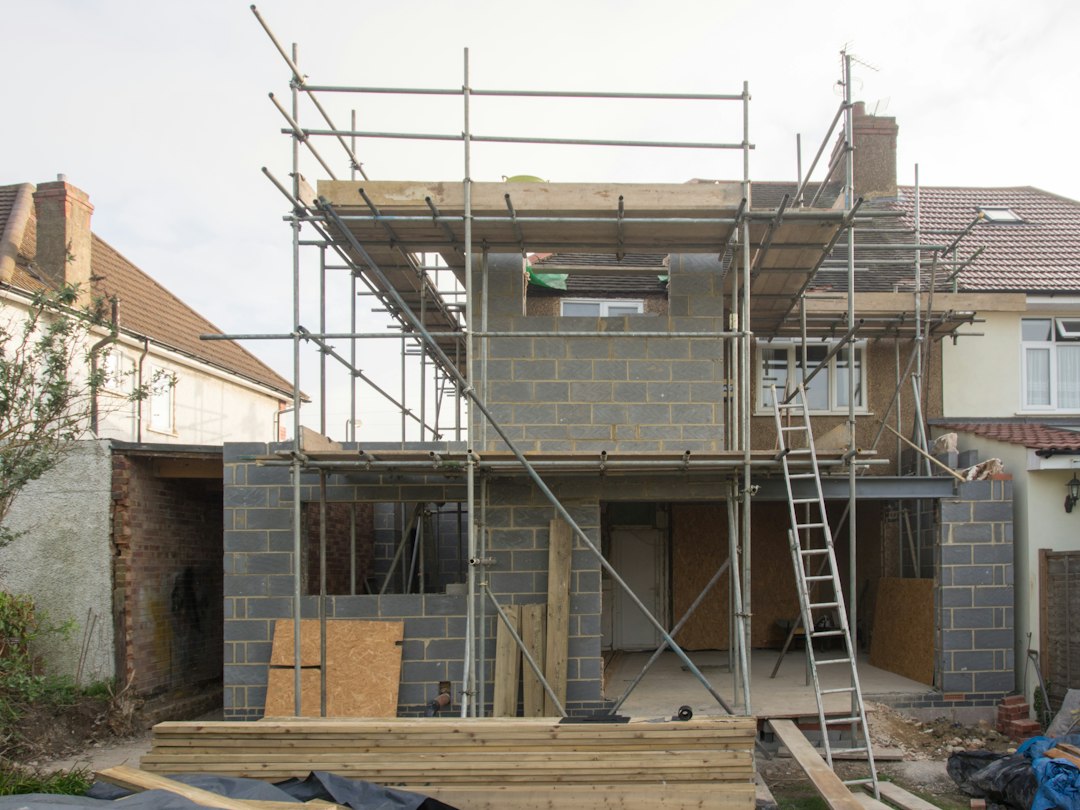
A hard money loan is a short-term, asset-based loan from a private lender, secured by investment real estate and underwritten mainly on the property and the deal rather than the borrower’s income. Investors use a hard money loan to buy and renovate a property quickly, then repay it within months by selling or refinancing, and they pay for that speed with higher rates and upfront points.
Even if you never borrow a dollar of it, hard money shapes your business as a wholesaler. Many of the flippers on your buyers list finance purchases this way, so their lender’s limits decide how much they can pay you. This guide breaks down how the loans are priced, the three ratios lenders use, a full cost example, and how to build your offers around your buyers’ financing. It also becomes your own tool the day you decide to close on a house yourself for a light-touch wholetail resale.
The terms you will actually see
Terms vary by lender, market and borrower experience, and they move with the broader rate environment. Published ranges cluster in a few places. Herring Bank’s 2025 guide puts rates at roughly 8–15% a year, typically 2–3 origination points, loan amounts capped around 65–75% of after-repair value, terms of 6 to 24 months, and closings in 5 to 15 business days. GOBankingRates gives a similar picture: rates of about 7–15%, points from 1% up to 4%, and terms that usually run no longer than 24 months.
| Term | Typical published range | What drives it |
|---|---|---|
| Interest rate | About 8–15% a year, usually interest-only | Experience, leverage, property type, market |
| Origination points | About 1–4% of the loan | Loan size, speed, lender competition |
| Loan-to-ARV cap | About 65–75% | Lender risk appetite and exit plan |
| Term | 6–24 months | Project scope; extensions cost extra |
| Time to close | Days to a few weeks | Appraisal or valuation, title, draw setup |
Those are ranges, not quotes. A first-time borrower in a slow rural market will see the expensive end; a flipper with a dozen completed projects in a liquid metro will see the cheap end. Always get a written term sheet.
LTV, LTC and ARV: the three numbers lenders use
Most hard money lenders size a loan with more than one test and lend the lowest result:
- Loan-to-value (LTV): the loan divided by the property’s current “as is” value. Common on bridge loans with no rehab.
- Loan-to-cost (LTC): the loan divided by purchase price plus rehab budget. Many lenders fund a high share of the purchase and most or all of the rehab, but want the borrower to put real cash in.
- Loan-to-ARV: the loan divided by the after-repair value. This cap protects the lender if the project goes wrong and they have to sell the finished house.
Rehab money is usually held back and released in draws after inspections, not handed over at closing. That means the borrower fronts each stage of work, then gets reimbursed. New investors routinely underestimate how much cash that requires.
What a hard money loan really costs: a worked example
All figures are hypothetical. A flipper buys a house for $150,000 with a $50,000 rehab budget and an expected ARV of $280,000. The lender offers 12% interest-only, 2 points, up to 90% of purchase price and 100% of rehab, capped at 70% of ARV, with a $1,500 processing fee.
| Line item | Amount |
|---|---|
| Purchase funded (90% of $150,000) | $135,000 |
| Rehab funded through draws | $50,000 |
| Total loan ($185,000; 70% of ARV is $196,000, so the cost test controls) | $185,000 |
| Borrower’s down payment | $15,000 |
| Points (2% of $185,000) | $3,700 |
| Processing fee | $1,500 |
| Interest, 6 months, assuming average draw balance of $160,000 | $9,600 |
| Total financing cost | $14,800 |
Now stretch the timeline. If permits, contractor delays or a slow sale push the project to 10 months, interest alone grows to about $16,000, and many lenders charge an extension fee of a point or more after the original term. With one extension point, financing costs climb past $23,000 before you count taxes, insurance and utilities. That is why experienced flippers obsess over timelines, and why a deal that “works” at six months can lose money at ten. Run your own scenarios in the fix-and-flip calculator.
Why a wholesaler should understand hard money
Your buyer’s lender is an invisible party to your deal. If a flipper’s lender caps the loan at 70% of ARV and requires 10% down on the purchase, that flipper cannot pay whatever you ask. Price above what their financing supports and the assignment dies at appraisal, usually after you have spent two weeks marketing it.
Three practical consequences:
- Leave room for financing costs in your MAO. The 70% rule exists partly to cover points, interest and holding costs. If you shave it to 80% to fit a bigger fee, your financed buyers fall away first.
- Give buyers what their lender needs. Lenders ask for the purchase contract, a scope of work, a rehab budget and comps supporting the ARV. A package that includes credible repair estimates and sold comps helps your buyer get approved faster.
- Respect their closing timeline. Hard money closes fast, but not instantly. An appraisal or valuation, title work and draw setup still take time. A 7-day close on a financed buyer is a promise you may not control.
Hard money compared with other short-term money
| Source | Used for | Typical length | Main cost | Key limit |
|---|---|---|---|---|
| Hard money loan | Purchase plus rehab on a flip or BRRRR | 6–24 months | Interest plus points | LTC and ARV caps |
| Gap funding | The down payment and costs hard money won’t cover | Same as the senior loan | Fee or profit share | Adds a second lender and lien |
| Transactional funding | The A-to-B purchase in a double close | Hours to a day or two | Flat percentage fee | Needs a funded end buyer |
| Private money | Anything the lender agrees to | Negotiated | Negotiated return | Relationship and trust |
| DSCR or conventional rental loan | Long-term hold or refinance out of hard money | Up to 30 years | Lower rate, longer underwriting | Seasoning, appraisal, rent coverage |
Our guides to gap funding and transactional funding cover those tools in detail. The short version: hard money is the senior loan on most investor rehabs, and the other tools fill around it.
The rules that apply, and why they vary
Hard money for investors is mostly treated as business credit. Federal Regulation Z exempts credit “primarily for a business, commercial or agricultural purpose” under 12 CFR 1026.3(a), and the CFPB’s official commentary says credit to acquire, improve or maintain rental property that isn’t owner-occupied is deemed business purpose. The exemption is lost if the owner will live in the property for more than 14 days in the coming year.
That is why most hard money lenders will not lend on a home you plan to live in: owner-occupied lending brings in consumer mortgage rules that their business model isn’t built for. It is also why you should never tell a lender a property is an investment when you intend to occupy it.
State law adds another layer, and it is not uniform. Some states license or regulate private and business-purpose lenders, usury limits and their exemptions differ, and foreclosure procedure on a defaulted loan differs widely. Before you borrow in a new state, ask the lender which state license they operate under, and have a local attorney or your title company review the loan documents on your first deal.
How to vet a hard money lender
- Get a written term sheet with rate, points, every fee, draw process, extension terms and default interest.
- Ask for borrower references and talk to two investors who closed with them in the last six months.
- Ask how draws work: who inspects, how long reimbursement takes and what a draw costs.
- Check for upfront fee traps. Legitimate lenders may charge for an appraisal or valuation, but be wary of large “commitment” fees paid before you see a term sheet.
- Confirm the exit fits their rules. If you plan to refinance, ask whether there is a prepayment penalty or minimum interest period.
- Ask a local investor-friendly title company which lenders close smoothly. They see every lender’s paperwork.
Rate environment: why the refinance exit matters
Many borrowers plan to repay a hard money loan by refinancing into a long-term rental loan. That exit depends on long-term rates at the time of refinance, not when you bought. Freddie Mac’s Primary Mortgage Market Survey reported the 30-year fixed-rate average at 7.28% as of October 1, 2026, up from 7.03% the week before. Investor rental loans usually price above that owner-occupant benchmark. A refinance that penciled at a lower rate when you bought can fall short six months later, leaving you to sell or pay extension fees.
Second worked example: the same loan as a buy-and-hold
Hypothetical again. An investor buys a duplex for $210,000 with $40,000 of work and an expected value of $320,000. A hard money lender funds $189,000 of the purchase and the full $40,000 rehab at 11% and 2 points. After the rehab, both units rent and the investor applies to refinance at 75% of the appraised value.
| Step | If the appraisal comes in at $320,000 | If it comes in at $285,000 |
|---|---|---|
| New loan at 75% | $240,000 | $213,750 |
| Hard money payoff (principal) | $229,000 | $229,000 |
| Cash left over or needed before closing costs | About $11,000 back | About $15,250 needed |
The only change is the appraisal, and it turns a refinance that returns cash into one that needs a check. Points, interest and closing costs make both columns worse. Investors who use hard money for holds stress-test the appraisal before they buy, and they keep enough cash to cover a short refinance.
When a hard money loan is the wrong tool
- The margin is thin. If the deal only works with a perfect six-month timeline, financing costs will eat it.
- You have no cash reserve. Down payment, closing costs, the first rehab draw and monthly interest all come from you before any reimbursement.
- You plan to live there. Use an owner-occupant loan instead.
- Your exit is uncertain. If the property may not sell or appraise for the refinance you need, short-term debt with extension fees is a trap.
- You are wholesaling. On a straight assignment you never take title, so you don’t need a purchase loan. Borrowing to “close yourself” turns a wholesale into a flip; our comparison of wholesaling vs. fix-and-flip walks through that decision.
Reading a term sheet: the fees beyond the rate
Two loans with the same interest rate can cost very different amounts. These are the lines that usually explain the gap:
| Term sheet item | What it means | What to ask |
|---|---|---|
| Origination points | Percentage of the loan paid at closing | Is it charged on the full loan, including undrawn rehab funds? |
| Interest on undrawn funds | Some lenders charge interest on the full commitment, not just what has been drawn | Is interest “Dutch” (full amount) or “non-Dutch” (drawn balance only)? |
| Draw fees and inspections | A charge for each rehab reimbursement | How many draws are allowed, and how fast is each funded? |
| Extension fee | Cost to extend past the original term | How much, for how long, and is the extension guaranteed? |
| Minimum interest | A floor on interest even if you repay early | How many months are guaranteed to the lender? |
| Default rate | A higher rate after a missed payment or maturity | What triggers it, and is there a grace period? |
| Legal and doc fees | Lender’s attorney and document preparation | Is there a flat fee, or is it billed hourly? |
The interest-on-undrawn-funds line matters more than it looks. In the first worked example, interest on the full $185,000 for six months at 12% would be $11,100 instead of $9,600, because you would pay interest on rehab money that hasn’t been spent yet. Ask before you sign.
Three ways out of a hard money loan
Every hard money lender asks one question before anything else: how will you pay this back? There are three common answers, and each has its own failure point.
- Sell the finished property. The standard flip exit. It fails when the resale market slows or the ARV was optimistic. Build in a price cushion and enough time to sell.
- Refinance into a long-term rental loan. The buy-and-hold exit. It fails when the appraisal, rent or interest rate at refinance doesn’t support the new loan, or when the lender’s seasoning rules don’t line up with the hard money term.
- Pay off with other capital. A partner buyout or other funds. It fails when that money isn’t committed in writing before you need it.
Lenders like a primary exit and a backup. If you plan to sell, know what the property would rent for in case it doesn’t sell. If you plan to refinance, know the price at which you’d sell instead.
Questions to ask on the first call
- Do you lend in this state and county, and on this property type?
- How do your terms change for a first-time borrower versus someone with completed projects?
- Do you use a full appraisal, a broker price opinion or an internal valuation, and who pays for it?
- What percentage of purchase and rehab will you fund, and what is your ARV cap?
- How long from application to closing on your last ten loans?
- Do you allow a second lien or gap funding behind you?
- Can a loan be assigned to my buyer if I wholesale the deal instead of closing it myself?
The answers tell you whether the lender fits your deal, and the way they answer tells you whether they will be easy to work with when a draw is late or a project runs over.
What to prepare before you apply
Asset-based doesn’t mean paperwork-free. A typical lender package for a first flip includes:
- The signed purchase agreement or assignment, with the closing date.
- A line-item scope of work and budget, ideally with a contractor bid.
- Three to five sold comps supporting the ARV.
- Bank statements showing the down payment, closing costs and reserves.
- Your entity documents if you are borrowing through an LLC, and usually a personal guarantee.
- A track record list, even if short. Some lenders price first-time borrowers differently.
Hard money questions
Does a hard money loan require good credit?
Credit matters less than with a bank loan, but most lenders still pull it and price it. The deal, your cash and your experience carry more weight.
Can I get 100% financing?
Rarely from one lender. Investors who reach it usually combine a hard money loan with gap funding or a partner’s capital, which adds cost and another party to satisfy.
Is hard money the same as private money?
People use the terms loosely. Hard money usually means an organized lending business with set terms. Private money usually means an individual lending on terms you negotiate directly; our guide to private money lenders covers how those loans are found, pitched and documented.
How fast can a hard money loan close?
Published ranges run from several business days to a few weeks. Title issues, valuation and your own paperwork are the usual delays.
Fund and price deals right
Price deals your buyers can finance
The free starter kit includes a deal analyzer that builds in financing costs, starter contracts, a seller script and a buyer’s list checklist.