
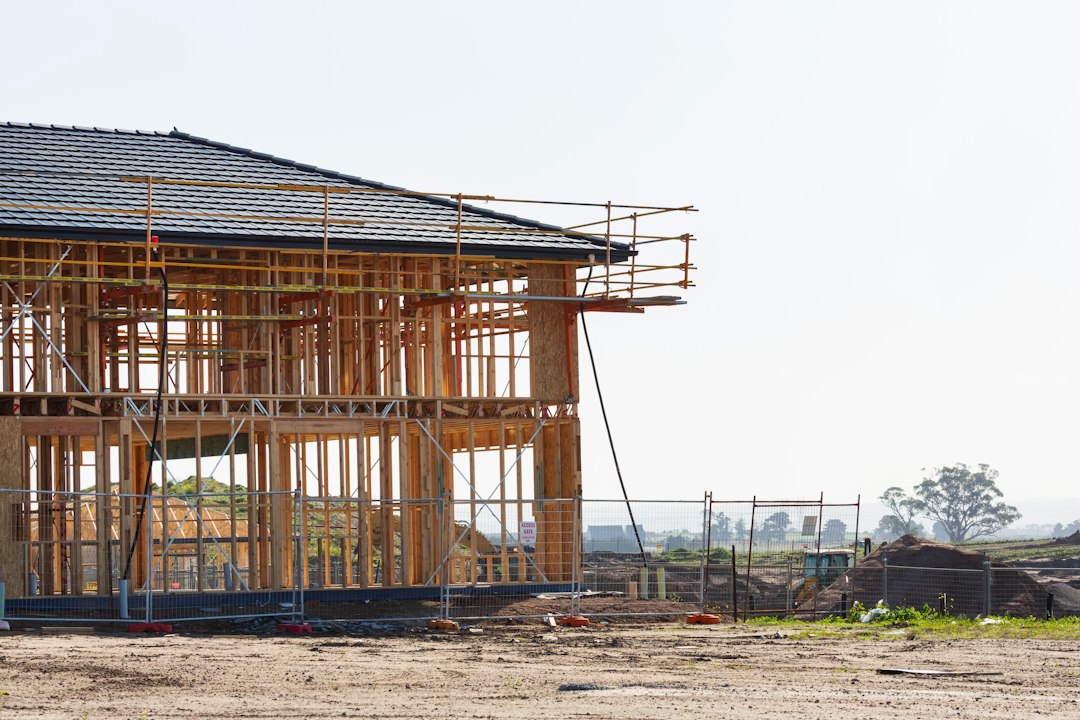
In the wholesaling vs fix and flip decision, you are choosing between the two most common ways people get into real estate investing, and they are usually pitched as if one is simply the bigger version of the other. They are not. They reward different resources, carry different risks, and fail in different ways, so the right place to start depends less on which one pays more and more on what you already have: cash, credit, time, and tolerance for things going wrong.
This guide puts the two side by side on one example house, so you can see where the money and the risk actually sit before you choose.
Wholesaling vs fix and flip: the short answer
If you have more time than capital, start with wholesaling. It teaches you the two skills every investor needs, finding discounted properties and valuing them correctly, without asking you to borrow money or manage a renovation. If you already have meaningful cash reserves, access to lending, and some construction or project-management experience, starting with a flip can make sense, as long as you respect how much can go wrong between purchase and sale.
Most people reading this are in the first group. That is not a knock on flipping; it is a matter of sequencing.
How each strategy makes money
Wholesaling: you sign a purchase contract with a motivated seller, then assign that contract to a cash buyer for a fee, or buy and immediately resell through a double close. You never renovate and, with an assignment, never take title. Your profit is the spread between your contract price and what the buyer pays for your position. If the process is new to you, start with our step-by-step wholesaling guide.
Fix and flip: you buy the property, fund the repairs, carry it while the work gets done, and sell it at or near its after-repair value (ARV). Your profit is what is left of the sale price after purchase, rehab, holding, financing, and selling costs. Our step-by-step guide on how to flip a house walks through each stage with a worked budget.
Notice that the flipper is usually the wholesaler’s customer. Many wholesale deals are sold to the exact investors doing the flips. The two strategies are two ends of the same transaction.
One house, two strategies
Here is a simplified example. For context, ATTOM’s Q2 2026 flipping report put the typical flip’s gross profit at $60,526. The numbers below are illustrative, not typical results; your market, your contractor, and your financing will change every line.
- After-repair value: $250,000 (based on renovated sold comps; see how to calculate ARV)
- Repair estimate: $45,000 (see how to estimate repair costs)
- A flipper using the common 70% rule would pay up to about $250,000 × 0.70 − $45,000 = $130,000
The wholesaler’s version
You negotiate the house under contract at $120,000 and assign it to a flipper at $130,000. If it closes, your fee is $10,000. Your money at risk is your earnest money deposit and whatever you spent on marketing to find the seller. Your time from contract to closing might be two to six weeks. If the deal falls apart, you usually lose time and possibly the deposit, depending on your contract terms.
The flipper’s version
The flipper buys at $130,000 and spends $45,000 on repairs. Say the project takes six months, and holding costs (loan interest, taxes, insurance, utilities) come to $9,000. Buying and selling costs, including closing costs and agent commissions on the sale, come to roughly $20,000. Total cost: about $204,000. Sold at $250,000, that leaves roughly $46,000 before taxes.
Now stress-test it. Repairs run 30% over budget (another $13,500) and the market softens so the house sells 5% under ARV ($12,500 less). The profit falls to around $20,000, and the timeline probably stretched too, adding more holding cost. A bad foundation surprise or a stalled permit can erase the rest. That range of outcomes is the price of the bigger upside. Insurance is one of those holding costs, and an empty flip usually needs a vacant or builder’s risk policy rather than an ordinary homeowners policy.
Capital and credit
A flip needs real money. Even with a hard money loan or a private lender, investors usually bring a down payment, closing costs, part or all of the rehab budget, and reserves for surprises. Lenders commonly look at your experience, credit, and liquidity, and first-time flippers often get less favorable terms.
A wholesale deal needs far less: an earnest money deposit (amounts vary widely by market and by what you negotiate), a marketing budget, and tools like a phone and a skip-tracing service. We walk through what does and does not cost money in wholesaling with no money and no credit.
Risk: what you can lose
- Wholesaling risk is mostly time, deposit, and reputation. The biggest danger is signing a contract at a price no buyer wants, which is why the numbers and your buyer’s list matter so much.
- Flipping risk is balance-sheet risk. You own the house. Contractor delays, hidden damage, rising rates, and a slow market all hit you directly, and loan payments continue whether or not work is happening.
- Legal and compliance risk exists in both. Wholesaling in particular has seen new state rules in recent years, so read is wholesaling real estate legal? and your state’s rules before you market a contract.
Time and skills
Both strategies share the same front end: generating leads, talking to sellers, running comps, estimating repairs, and negotiating. Flipping adds a second job, project management. You are hiring and supervising contractors, pulling permits where needed, ordering materials, making design choices buyers will pay for, and then listing and selling the finished house. There is also a middle path between the two: wholetailing, where you take title, do a light cosmetic refresh and resell near retail without a full renovation.
Wholesaling adds a different second job: marketing deals to buyers and managing a closing through a title company or closing attorney. It is lighter on hours per deal, which is one reason people can wholesale part time while keeping a job.
Why wholesaling is a good training ground
- Volume of reps. You analyze many more properties per month than a flipper actually buys, so your ARV and repair estimates sharpen quickly.
- You meet the flippers. Your buyer’s list is a room full of people who already flip. Ask them what they paid for repairs, what surprised them, and which neighborhoods they avoid.
- Mistakes are smaller. A misjudged wholesale deal usually costs a deposit and some weeks. A misjudged flip can cost a large share of your savings.
- The skills transfer. Lead generation, negotiation, and underwriting are the same in both. When you do flip, you will already know how to buy right.
When starting with a flip makes sense
Flipping first can be reasonable if several of these are true for you:
- You have cash reserves beyond the down payment and rehab, enough to cover delays and overruns without panic.
- You work in construction or a trade, or have a trusted contractor who has done investor rehabs.
- You can qualify for financing or have a private money partner.
- You are comfortable holding a property if it does not sell quickly, including renting it out as a backup plan.
If most of those are not true yet, wholesaling lets you build them.
The hybrid path most investors actually follow
In practice, the choice is not permanent. A common progression looks like this: wholesale deals to learn your market and build capital, keep one deal that fits your budget and skills and flip it yourself, or partner on a flip with an experienced buyer from your list (a joint venture where you bring the deal and they bring money and rehab experience). Over time, some people keep wholesaling because they like the pace, some move into flips, and some move into rentals. Rentals also open the door to tax-deferred trades under the 1031 exchange rules, which flips and assignments generally cannot use. Every path starts with finding deals at the right price.
A quick decision checklist
- How much cash could you lose without it changing your life? If the answer is less than a typical rehab budget in your market, start with wholesaling.
- Can you estimate repairs within about 10 to 15% today? If not, practice on wholesale deals first.
- Do you have 10 or more hours a week for lead generation? Both strategies need it.
- Do you know at least five active flippers in your market? If not, building that list is step one either way.
- Have you read your state’s rules for assigning contracts and marketing deals? Do that before your first offer.
Where you apply this matters: see real estate wholesaling laws by state for your state’s rules and a guide to each major city’s records, buyers and housing stock.
Compare both paths: run the same house through the free fix and flip calculator and the MAO calculator to see the flip profit next to your wholesale fee.
The flip side in 2026. Public data in our State of Wholesaling 2026 report shows flip margins falling for two years, which changes the math for both paths. A novation sits between the two, and how much wholesalers make shows the fee side.
Wholesaling vs fix and flip after financing and taxes
The first example stopped before financing detail and taxes, so here is a second house carried to after-tax dollars. Hypothetical example: ARV of $320,000 and a $55,000 rehab. A wholesaler contracts it at $160,000 and assigns it for $172,000. The flipper who buys the assignment uses a hard money loan with assumed terms of 90% of the purchase price plus 100% of the rehab, 2 points, and 12% interest-only, charged on the full balance for simplicity over a six-month project.
| Line item (hypothetical) | Wholesaler | Flipper |
|---|---|---|
| Purchase price | $160,000 contract, never funded | $172,000 |
| Rehab | $0 | $55,000 |
| Loan amount | None | $209,800 |
| Points (2%) and lender fees | $0 | $4,196 + $1,500 |
| Interest, 6 months at 12% | $0 | $12,588 |
| Buy-side closing costs | $0 | $3,000 |
| Taxes, insurance, utilities ($600/month) | $0 | $3,600 |
| Selling costs (5% commission + 1.5% closing) | $0 | $20,800 |
| Marketing to find the deal | $3,000 | Not tracked |
| Net profit before tax | $9,000 | $47,316 |
| Own cash put in | Earnest money (returned at closing) + $3,000 | About $42,084 |
| Calendar time | About 3 to 6 weeks | About 6 to 7 months |
The flipper’s cash figure is the $17,200 down payment plus points, lender fees, buy-side closing, carrying costs, and monthly interest, all of which come out of pocket before the house sells.
The stress case
Push the same flip to eight months, add 20% to the rehab, and sell 5% under ARV. The bigger loan, two extra months of interest, and the lower price shrink profit to about $14,860. The wholesaler’s worst realistic case on this house is a cancelled contract and the marketing spend. Run your own version of both columns in the fix and flip calculator before you trust either number.
Where taxes land
If both people are treated as being in the business, both profits face income tax and self-employment tax. Using the Schedule SE method (92.35% of net profit taxed at 15.3%) and an assumed 22% marginal income tax rate purely for illustration, the wholesaler keeps about $5,888 of $9,000 and the flipper about $30,956 of $47,316. State income tax would come off both.
What the latest flipping data adds
ATTOM’s Q2 2026 report, released October 1, 2026, counted 77,991 flipped single-family homes and condos, or 6.2% of all home sales, down from 7.3% a year earlier. The typical profit margin was 21.5%, down from 27.6% in Q2 2025, and the typical flip took 161 days from purchase to resale.
Read those numbers carefully. ATTOM defines gross profit as resale price minus purchase price, not including rehab and other expenses, so the 21.5% margin is not what flippers keep. For a wholesaler, tighter flip margins mean buyers push your price down, which is why your maximum allowable offer has to leave the flipper enough room.
How the tax code treats each strategy
Federal law excludes from the definition of a capital asset any property held primarily for sale to customers in the ordinary course of a trade or business (26 U.S.C. § 1221(a)(1)). A flipper who buys, renovates, and resells as a business is usually holding inventory, not an investment, so the profit is ordinary income even when the house was held more than a year. Assignment fees from a steady wholesaling business are typically business income too.
That matters because business income also carries self-employment tax: 15.3% in total (12.4% Social Security and 2.9% Medicare), owed once net earnings reach $400. On the 2025 Schedule SE, the Social Security portion applies only up to $176,100 of combined wages and self-employment earnings, and you deduct one-half of the self-employment tax when figuring income tax. Set aside a share of every closing for estimated payments. See our wholesale real estate taxes guide; this is where a CPA who works with investors earns the fee.
State rules hit the two strategies differently
Wholesalers mostly face rules about selling contracts; flippers face construction rules. Two examples:
- Oklahoma (wholesaling). The Predatory Real Estate Wholesaler Prohibition Act, effective November 1, 2021, required real estate wholesalers to obtain a real estate license, and S.B. 1075 (effective November 1, 2025) added mandatory written disclosures and a two-business-day cancellation right for homeowners. See the Oklahoma wholesaling guide.
- California (flipping). The owner-builder exemption from contractor licensing applies only when none of the improvements are intended or offered for sale, and selling within one year of completion creates a rebuttable presumption that you built for sale (Business and Professions Code § 7044). See the California guide.
Rules change and vary a lot, so check your own state on the wholesaling by state directory and your city’s permit office before you commit to either exit.
How to test both exits on your next lead
- Set a conservative ARV from renovated sold comps.
- Get a contractor’s written repair scope, plus a contingency.
- Call two lenders for real terms (points, rate, draw schedule) instead of guessing.
- Build the flip column, including a stress case with a longer timeline and a lower sale price.
- Ask three buyers from your list what they would pay. That is your wholesale column.
- Compare after-tax profit and the worst case, not the headline.
When neither one is the right move
Sometimes the honest answer is to pass. If the only way the numbers work is an optimistic ARV, neither exit works: a buyer will not pay it and a flip will not sell for it. If the seller has little equity, the spread is not there for anyone, though subject-to or seller financing may still fit. If the house would rent well and is in a neighborhood you know, holding it may beat both. And without consistent weekly hours, either strategy just burns marketing or interest.
Wholesaling vs fix and flip FAQ
Can I wholesale a deal and keep a share of the flip?
Yes, through a written joint venture where you bring the contract and a partner brings capital and rehab management. Put title, budget approvals, and the profit split in writing.
Which strategy is faster to a first paycheck?
Usually wholesaling, because an assignment can close in weeks. ATTOM’s typical flip took 161 days from purchase to resale in Q2 2026, before counting the time spent finding the deal.
Wholesaling guides for top markets
Start with the numbers
The free starter kit includes the deal analyzer we use to run ARV, repairs, and maximum offer on every property, plus starter contracts and a buyer’s list checklist.
Want someone to check your numbers before you send an offer? Our real estate wholesaling mentorship reviews your deals, seller calls and contracts with you every week.
Related guides
Fresh from the blog
Latest wholesaling guides

Massachusetts Foreclosure Process: A Stage-by-Stage Guide for Investors
The Massachusetts foreclosure process is mostly nonjudicial: after a 90-day right-to-cure notice and a short servicemembers case, the lender can…
Read the guide
Tired Landlords: How to Find Them, What to Say, and Deals That Fit
Tired landlords are rental owners who no longer want to deal with tenants, repairs or management and will trade some…
Read the guide
SEO for Real Estate Investors: How to Rank for Motivated Seller Searches
SEO for real estate investors means getting your website in front of homeowners who search for a fast or as-is…
Read the guide
How to Calculate Price Per Square Foot (and When It Misleads)
To calculate price per square foot, divide a home's sale price by its finished, above-grade living area. The math is…
Read the guide
How to Buy an Abandoned House: Find the Owner, Clear Title, Close
To learn how to buy an abandoned house, start with the fact most guides skip: someone still owns it. You…
Read the guide
DealMachine vs PropStream: Which Is Better for Finding Deals?
DealMachine vs PropStream compared: pricing, driving for dollars, list building and which tool suits a new wholesaler.
Read the guide
PropStream vs BatchLeads: Which One Should a Wholesaler Pick?
PropStream vs BatchLeads compared for wholesalers: pricing, data, skip tracing, texting and which one fits your first deals.
Read the guide
Liquidated Damages in Real Estate: How the Clause Protects Wholesalers
Liquidated damages in real estate are a sum, usually the earnest money, that the seller keeps as full compensation if…
Read the guide
Lead-Based Paint Disclosure: What Investors Must Do Before Selling or Renting
A lead-based paint disclosure is required before a buyer or tenant is bound on any home built before 1978. Here…
Read the guide