
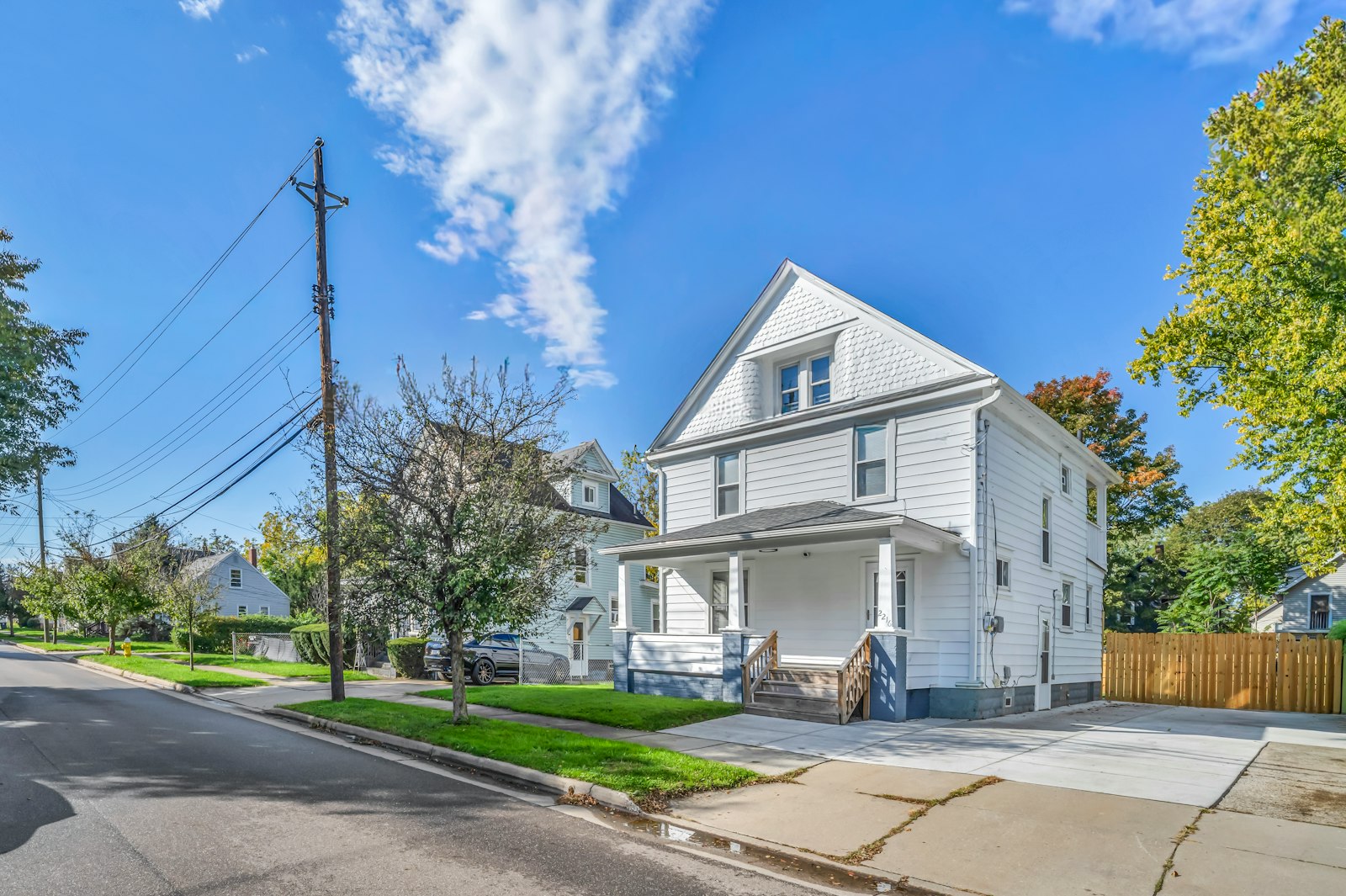
A certificate of occupancy (CO) is the document a local building department issues to say a building, or part of one, has passed its inspections and may legally be used for a specific purpose, such as a single-family home or a two-unit dwelling. For investors, the certificate of occupancy matters because it defines how many units you are legally buying, and in some towns a resale CO or point-of-sale inspection can add repairs and delays to a deal before it ever closes.
Below: where the CO comes from in the codes, when one is required, which places inspect at resale, how illegal units affect financing, and how to check records, with two hypothetical deals.
What a certificate of occupancy actually certifies
There is no national CO law. The rules come from model codes published by the International Code Council (ICC), which states and cities adopt, sometimes with local amendments. Commercial buildings and apartment buildings fall under the International Building Code (IBC), where the certificate of occupancy appears in Section 111 of the administrative chapter. One- and two-family homes and townhouses usually fall under the International Residential Code (IRC), where the equivalent is Section R110. A third model code, the International Existing Building Code, has its own CO section for alterations and changes of occupancy in existing buildings.
The core idea is the same in all of them: a building or structure may not be used or occupied, and an existing building’s occupancy may not be changed, until the building official issues a certificate. Under the IBC, the certificate lists the permit number, address, owner, use and occupancy classification, construction type, occupant load, and any special conditions.
Wording varies by jurisdiction. Minnesota puts its CO rule in Minnesota Rules 1300.0220, which bars use or occupancy without a certificate and lets the building official issue temporary certificates. New York City says a CO states a building’s legal use and type of permitted occupancy, has no expiration date, and is required for new buildings and for existing buildings with a change in use, egress, or type of occupancy. Its Department of Buildings also notes that buildings built before 1938 generally do not need one unless later alterations changed their use, egress, or occupancy.
So a missing CO on a 1920s house is not automatically a red flag. A missing CO for a basement unit added in 2015 is.
Temporary certificates of occupancy
A temporary certificate of occupancy (TCO) lets people occupy a building, or part of it, before all permitted work is finished, as long as the building official finds the occupied portion is safe. The Sedgwick County, Kansas TCO form cites IRC Section 110.4 and IBC Section 111.3 as the basis. The official sets the time limit, and local rules differ. Boise, Idaho’s amended R110.4 allows up to 90 days at a time, with written extensions, and generally no more than two years in total.
Buy a property on a TCO and you inherit the job of closing out the permit before the temporary certificate runs out.
When a CO is required
Under the model codes and most local versions, expect the building department to require a new or amended CO in these situations:
- New construction. Every new building needs a final inspection and a CO before anyone moves in.
- Change of use or occupancy. Turning a single-family house into a duplex, a storefront into an apartment, or a house into a daycare or office changes the occupancy and triggers review.
- Adding units. A new legal unit in a basement, attic, or garage is a change in occupancy. In most places it also has to pass zoning first.
- Major alterations or additions. Many jurisdictions require a final approval or an updated CO after significant permitted work, especially work that changes egress, layout, or occupant load.
- Resale or new tenancy, in some towns. This is a local requirement on top of the building code, covered in the next section.
Resale COs and point-of-sale inspections
Most US jurisdictions never look at an existing house again when it sells. A minority require an inspection or certificate before a sale or new tenancy, and these are the places where flippers get surprised. The rules are local, so the only reliable check is the city or township website. Here are verified examples from three states.
| Place | What is required | Details that affect investors |
|---|---|---|
| New Jersey (statewide) | Certificate of smoke alarm, carbon monoxide alarm, and portable fire extinguisher compliance | Required before a one- or two-family home is sold, leased, or otherwise changes occupancy. Towns with their own resale inspection check it as part of that process. |
| Wayne Township, NJ | Continued certificate of occupancy (CCO) on sale or rental | No inspection while permits are open; attic or basement apartments, additions, and finished basements must have had permits; CCO valid 90 days; closing may be allowed with a purchaser’s agreement of up to 60 days. |
| Cleveland Heights, OH | Point-of-sale Certificate of Inspection before a sale contract is signed | Applies to houses, apartment buildings, condos, and commercial; $200 for the first unit plus $50 per additional unit; valid one year. |
| Minneapolis, MN | Truth in Sale of Housing (TISH) evaluation | Required before the property can be shown; covers single-family, duplexes, and townhouses; required repairs need reinspection, or a buyer can accept responsibility for them. |
The New Jersey rule comes from the state fire code at N.J.A.C. 5:70-2.3. Many New Jersey municipalities add their own resale CCO on top of it. Wayne Township’s CCO page shows how far that can go: the inspection checks zoning and property maintenance compliance, including whether basement apartments and second kitchens were built with permits. The Cleveland Heights point-of-sale program requires the seller to give the buyer the certificate before the contract is signed. Minneapolis TISH requires a full report before showings. Other towns run their own programs with different fees and repair standards, so never assume one town’s rule applies next door.
How unpermitted work and illegal units hit value and financing
The CO and permit history define the legal property. A garage converted to a bedroom, a basement apartment, or a third unit carved out of a duplex may be physically there but legally invisible.
Appraisal and loan eligibility
Fannie Mae’s Selling Guide requires the appraiser to report whether the property is a legal conforming use, a legal nonconforming (grandfathered) use, or an illegal use under zoning, and the site section guidance says Fannie Mae only buys loans where the improvements are a legal conforming use, with an allowance for legal nonconforming uses whose effect on value is reflected. Under the improvements section guidance, an appraiser who finds an addition without the required permit must comment on its quality and appearance and its impact, if any, on market value.
An accessory unit that zoning does not allow at all can still be eligible, but only under extra conditions: the report must say the use does not comply with zoning, the property is appraised on its current use, the lender must confirm the unit will not jeopardize a future insurance claim, and the report must include at least two comparable sales with the same non-compliant use. Fannie Mae also does not allow ADUs on two- to four-unit properties. In practice, a retail buyer’s lender may decline, require the unit be returned to its legal use, or give it little or no value.
Rental income from illegal units
Income from an illegal unit is fragile. A building department can order the unit vacated, and depending on local law the owner may owe the tenant money. Treat that rent as upside, not as the basis of your offer.
The cost to legalize
Legalizing a unit usually means zoning approval first, then permits, drawings, and inspections for egress windows, ceiling height, fire separation, smoke and CO alarms, and often separate utilities. Inspectors may require walls opened. If zoning will not allow it, the only path is removing the kitchen.
How to check CO and permit history before you sign
Put this in your due diligence checklist for every deal, not only multi-unit buildings:
- Search the building department’s online portal. Many cities post permits and COs by address. New York City, for example, lets anyone pull COs through its BIS and DOB NOW systems.
- Call the building department or file a public records request if nothing is online. Ask for the current CO, all permits with status (open, finaled, expired), and open violations. Start on day one of your inspection period.
- Check zoning. Confirm the zoning district allows the number of units the seller claims. A legal nonconforming use may need proof it existed before the zoning change.
- Compare the records to the property. Match the CO’s unit count, the assessor’s bedroom and bath count, and the square footage against what you see. Extra meters, mailboxes, and kitchens are clues.
- Ask whether the town requires a resale certificate, what it costs, how long it takes, and whether open permits block the inspection.
- Look for code enforcement history. Violations, vacate orders, and rental registration problems often point to illegal units. Our guide to code violation leads explains how investors read these records.
A title search usually will not show permit problems, because permits live with the building department, not the land records. The permit file is your job.
Worked deal 1: the “triplex” with a CO for two units (HYPOTHETICAL)
A wholesaler gets a lead on a two-story house the seller calls a triplex. Two units are upstairs and on the main floor, and a third is in the basement. All three are rented. The seller wants $295,000. Here are the hypothetical numbers.
| HYPOTHETICAL | As marketed (3 units) | As legal (2 units per CO) |
|---|---|---|
| Monthly rents | $1,300 + $1,300 + $950 = $3,550 | $1,300 + $1,300 = $2,600 |
| Annual gross rent | $42,600 | $31,200 |
| Value at 7x gross rent (assumed local multiplier) | $298,200 | $218,400 |
| Basement path | Not applicable | Remove kitchen, about $8,000, or legalize if zoning allows, assumed $45,000+ |
The records search shows a CO for a two-family dwelling and no permits for the basement work. Zoning allows two units on the lot. That basement rent is worth about $80,000 of value on paper and close to nothing in a lender’s eyes, because an extra unit beyond what zoning allows cannot be legalized. The basement tenant also creates work: someone has to handle a lawful exit for that tenancy, which is part of buying any tenant-occupied property.
The honest deal is priced as a duplex. If the wholesaler’s buyers want a 25% discount to as-legal value after the $8,000 basement fix, the math is roughly $218,400 x 0.75 – $8,000 = $155,800 as a maximum price to the end buyer, before the assignment fee. The seller wants $295,000, so this lead probably dies, or the conversation turns to the seller’s real motivation. A wholesaler who contracts at $260,000 and markets a “triplex” has a deal that collapses the moment a buyer pulls the CO.
Worked deal 2: the resale CO that ate the flip margin (HYPOTHETICAL)
A flipper buys a single-family house in a town that requires a resale CO. The original budget comes from a standard walkthrough and our method for estimating repair costs. Nobody checked the permit file.
| HYPOTHETICAL line item | Original plan | After resale CO inspection |
|---|---|---|
| ARV | $295,000 | $295,000 |
| Purchase + closing | $184,000 | $184,000 |
| Rehab | $45,000 | $45,000 |
| Retroactive permit for basement bathroom (open walls, inspect, repair) | $0 | $6,500 |
| Rebuild unpermitted deck with proper footings | $0 | $4,800 |
| Handrails, GFCI outlets, smoke and CO alarms | $0 | $900 |
| Holding costs ($2,000/month) | $12,000 (6 months) | $14,000 (7 months) |
| Selling costs (8% of ARV) | $23,600 | $23,600 |
| Profit | $30,400 | $16,200 |
The basement bath and deck were done by a previous owner without permits, and the resale inspection would not pass with them in place. An extra month waiting on permits and reinspection pushed holding costs up too. The flipper’s profit fell by almost half, and a 2% swing in ARV would have wiped out most of what was left. Run both versions in the fix and flip calculator before you buy, and use the ARV calculator with comps that match the legal bedroom and bath count, not the marketed one.
What the certificate of occupancy means for wholesaler disclosure and the buyer’s budget
A wholesaler is selling a contract position, but the buyer is pricing a building. If you know the CO says two units and you market three, you are misrepresenting the property, and most states’ fraud and misrepresentation laws do not care that you never held title. Practical rules:
- Market the legal unit count and bedroom count. Mention the extra space as “basement with kitchen, unpermitted” or “non-conforming space,” not as a unit.
- Share what you found: the CO, open permits, violations, and any resale certificate requirement. A one-page records summary makes your deal easier to sell.
- Price the cost to cure into your offer. Your end buyer will add it to their rehab budget, so your spread has to absorb it.
- If the town has a resale inspection, find out from the contract and the local rules who must order it and who pays for repairs, and leave time for it in your closing date.
Resale inspections also shift strategy. In a town where the seller must get a certificate before listing or showing, a quick wholetail may be harder because the property cannot just be cleaned and relisted. Weigh that when choosing between a flip and an assignment, using our comparison of wholesaling vs. fix and flip.
Where investors lose money on CO issues
- Paying for units that do not legally exist. The most expensive mistake is valuing an illegal unit’s rent at full value. Price on the CO, and treat the extra rent as a bonus you may lose.
- Assuming you can legalize. Zoning may cap unit count, parking, or lot size. Ceiling heights and egress may be physically impossible to fix at a sensible cost.
- Ignoring open permits. An old permit that was never finaled can block a resale inspection, as in Wayne Township, or force a new owner to reopen finished walls.
- Forgetting the resale timeline. Scheduling, reinspections, and certificate expiration dates can push a closing back and add holding costs.
- Losing the exit buyer’s financing. A retail buyer using a conventional or government-backed loan may not close on a property with an illegal unit. That turns your retail flip into a cash-buyer sale at a lower price.
Each of these is cheap to discover before you sign and expensive to discover after.
Certificate of occupancy FAQ
Does every house have a certificate of occupancy?
No. Many older homes were built before local permitting or CO systems existed. In New York City, buildings built before 1938 generally do not need one unless they were later altered in use, egress, or occupancy. Ask the building department what proof of legal use it accepts.
Does a CO expire?
A regular CO generally stays valid until the use or occupancy changes, and New York City says its COs have no expiration date. Temporary COs and resale certificates do expire. Wayne Township’s resale CCO lasts 90 days, and Cleveland Heights’ point-of-sale certificate lasts one year.
Can I close on a property with open violations or no resale certificate?
Sometimes. Some towns allow closing if the buyer signs an agreement to make the repairs. Wayne Township allows a purchaser’s agreement of up to 60 days, and Minneapolis lets a buyer accept responsibility for required repairs. Your title company or closing attorney will know the local process.
Keep building your due diligence skills
Price the paperwork into every offer
Grab the free starter kit: a deal analyzer to model permit and resale inspection costs, starter contracts with room for a real inspection period, a seller script for asking about permits and unit counts, and a buyer’s list checklist so you know which buyers will take on legalization work.