
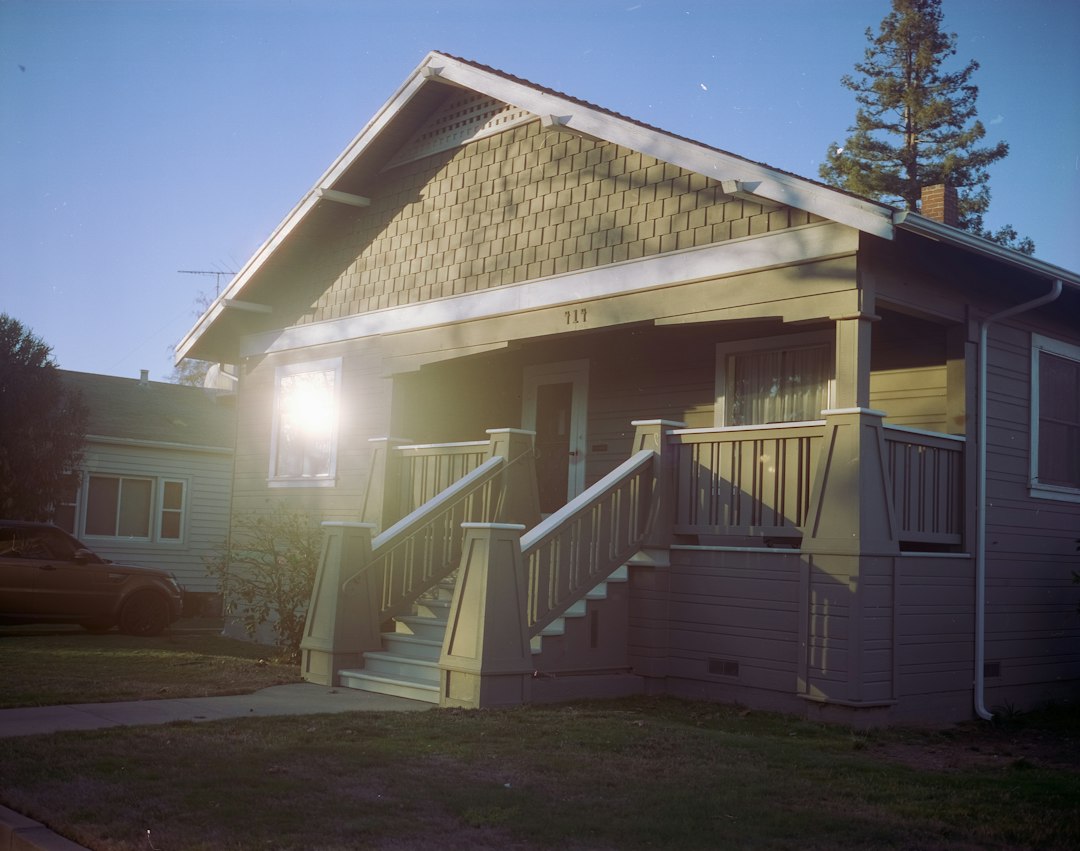
A DSCR loan is an investment property mortgage that qualifies the borrower on the rental income of the property instead of personal income, using the debt service coverage ratio: gross monthly rent divided by the monthly payment of principal, interest, taxes, insurance and any HOA dues. If the house rents for $1,850 and the full payment is $1,690, the ratio is about 1.09, and most lenders that offer the product would call that a qualifying deal.
For wholesalers, DSCR loans matter for a reason that has nothing to do with your own borrowing. A large share of the landlords on a typical buyers list finance their purchases or their refinances this way, which means the lender’s ratio quietly sets the ceiling on what those buyers can pay you. Learn how the ratio is built and you can price rental deals the way the buyer’s lender will, before anyone wastes a week on a contract that cannot close. The same rent-to-payment math is how you test a turnkey rental property pro forma before buying one.
What a DSCR loan actually is
Debt service coverage ratio lending comes from commercial real estate; the residential version applies it to one-to-four-unit rental homes. Instead of W-2s, tax returns and a debt-to-income ratio, the lender orders an appraisal with a rent schedule, checks the lease if there is one, and divides rent by the proposed housing payment.
Three features define the product:
- The property qualifies, not the paycheck. Self-employed investors and people with many financed rentals use them when conventional underwriting caps them out.
- It is a business-purpose loan. The rental is not owner-occupied, which changes which consumer lending rules apply (more on that below).
- It sits outside the agency box. Lenders often describe DSCR programs as non-QM products. Each lender writes its own guidelines, so minimum ratios, credit scores, loan-to-value limits and prepayment terms vary from one program to the next.
How a DSCR loan is calculated
Here is where most online explanations go wrong. Many articles define DSCR as net operating income divided by debt service, which is the commercial formula. Residential DSCR lenders use a simpler and stricter version. AD Mortgage’s DSCR matrix spells it out as “Gross Rental Income / Proposed PITIA (or ITIA for I/O),” and eLEND’s DSCR program matrix uses “Gross Rents/PITIA = DSCR.” In plain terms:
- Start with gross monthly rent. Lenders typically use the lower of the signed lease or the appraiser’s market rent estimate. Vacancy, repairs and management are not subtracted.
- Build the full monthly payment. Principal and interest at the note rate, plus one-twelfth of annual property taxes, one-twelfth of the insurance premium, and monthly HOA dues if any. That bundle is PITIA.
- Divide. Rent divided by PITIA is the DSCR. A ratio of 1.00 means rent exactly covers the payment; 1.25 means rent is 25 percent higher than the payment.
- For interest-only loans, drop the principal. Many programs calculate an interest-only loan on ITIA, which produces a higher ratio on the same house.
Short-term rentals are treated more cautiously. eLEND, for example, cuts gross short-term rental income by 20 percent before running the ratio, and some lenders will not count short-term income at all below a certain ratio. Ask before assuming a buyer can qualify on short-term rental projections.
Why gross rent instead of NOI matters
Because the formula ignores operating expenses other than taxes, insurance and HOA dues, a 1.10 ratio does not mean the property produces 10 percent positive cash flow. After vacancy, repairs, capital reserves and management, a house that just clears a DSCR lender can easily lose money each month. The ratio tells you whether the loan can be made, not whether the deal is good. To judge the deal itself, run the cash on cash return with every expense included.
Typical DSCR loan terms in 2026
There is no standard DSCR program, but published lender matrices from August and September 2026 cluster around similar numbers. The table below summarizes four of them. Treat it as a snapshot, not a quote.
| Term | What published 2026 matrices show |
|---|---|
| Minimum DSCR | 1.00 is common; some programs go to 0.75 or 0.80 with higher credit scores or lower leverage |
| Maximum LTV on a purchase | Often 80 percent for a single-family rental |
| Maximum LTV on a cash-out refinance | Often 75 percent |
| Minimum credit score | Roughly 660 to 700, with the best leverage reserved for 720 and up |
| Cash-out seasoning | Ranges from 6 to 12 months of ownership, or less with a reduced LTV |
| Prepayment penalty | Common; step-down or flat structures, availability varies by state and lender |
| Vesting | LLC or corporation often allowed, with personal guarantees from the owners |
A few specifics from the sources behind that table. Homebridge’s DSCR Plus guide (July 2026) lists a minimum DSCR of 1.00 and a 700 minimum score, and treats properties owned under six months as ineligible for cash-out. FundLoans’ Spectrum matrix (effective August 1, 2026) advertises ratios as low as 0.75, a 660 minimum score, 80 percent maximum LTV on purchases and 75 percent on cash-out. AD Mortgage requires a 680 score when the ratio is below 1.00. MC Funding requires a minimum of 12 months from acquisition to note date on cash-out. Same product name, very different rules.
How that compares with a conventional investment loan
Agency loans still exist for investors who qualify on income. Fannie Mae’s Eligibility Matrix dated August 5, 2026 allows up to 85 percent LTV on a one-unit investment property purchase and 75 percent on a one-unit cash-out refinance through Desktop Underwriter. Those numbers look similar to DSCR leverage, but the conventional loan requires full income documentation and counts every other mortgage against the borrower’s debt-to-income ratio. Investors usually move to DSCR when that ratio, not the property, is what stops them. Either way, the lender’s maximum loan to value ratio decides how much cash the buyer brings to closing.
The rules that do and do not apply
Regulation Z, the federal Truth in Lending rule, exempts “an extension of credit primarily for a business, commercial or agricultural purpose” and credit to entities that are not natural persons, under 12 CFR 1026.3(a). The official commentary to Regulation Z goes further: credit to acquire, improve or maintain rental property that is not owner-occupied is deemed to be for business purposes. That is why lenders say DSCR loans are not subject to the federal ability-to-repay and qualified mortgage rules, and why many require a signed certification of business purpose and an occupancy certification at closing.
Two consequences follow. First, a buyer who intends to live in the property cannot use a DSCR loan, and signing an occupancy certification they do not mean is mortgage fraud, not a technicality. Second, the borrower gets fewer consumer protections, so the terms in the note, especially the prepayment clause, deserve a careful read. State law can still matter: lenders publish lists of states where they will not charge a prepayment penalty or will charge one only when the loan closes in an entity name, and those lists differ from lender to lender. A buyer in Illinois, New Jersey or Michigan may see different prepay options than a buyer in Texas, so the lender’s state overlay is the document to check, not a national rule of thumb.
Worked example: will the buyer’s lender say yes?
Every figure here is hypothetical. A landlord on your list wants a three-bedroom house you have under contract. After their planned work, it should rent for $1,850 a month, supported by rental comps and a property manager’s opinion. They plan to buy at $225,000 with an 80 percent DSCR loan.
| Line item | Amortizing loan | Interest-only loan |
|---|---|---|
| Loan amount (80% of $225,000) | $180,000 | $180,000 |
| Rate (illustrative) | 8.0% | 8.0% |
| Principal and interest, or interest only | $1,321 | $1,200 |
| Property taxes (monthly) | $250 | $250 |
| Insurance (monthly) | $120 | $120 |
| PITIA or ITIA | $1,691 | $1,570 |
| Gross rent | $1,850 | $1,850 |
| DSCR | 1.09 | 1.18 |
At a 1.00 minimum, both versions qualify. If this buyer’s lender requires 1.25 for a small loan, as eLEND does for loans under $150,000, or prices its best rate at 1.20 and above, the amortizing version falls short. Now look at the monthly reality. Subtract an 8 percent vacancy allowance ($148), repairs and capital reserves at 15 percent of rent ($278) and management at 10 percent ($185), and the amortizing loan leaves roughly $611 of expenses against $159 of margin: a monthly loss of about $450 before any appreciation or principal paydown. The lender says yes. The spreadsheet says think again.
Working backward to a price
Wholesalers can flip the formula around. With rent at $1,850, taxes and insurance at $370, an 8.0 percent rate and an 80 percent loan, the highest purchase price each ratio supports is:
| Required DSCR | Maximum principal and interest | Maximum loan | Maximum price at 80% LTV |
|---|---|---|---|
| 1.00 | $1,480 | About $201,700 | About $252,100 |
| 1.10 | $1,312 | About $178,800 | About $223,500 |
| 1.25 | $1,110 | About $151,300 | About $189,100 |
These are our calculations using a standard 30-year amortization formula. The same house supports a price $63,000 lower for a 1.25 lender than for a 1.00 lender. If your contract price plus your fee lands at $230,000, you need a buyer whose lender accepts roughly 1.07 or less, or a buyer with a bigger down payment. Run variations in the cash-on-cash return calculator to see what the buyer actually earns at each price.
DSCR loans and the BRRRR refinance
Many buyers on a wholesaler’s list never plan to buy with a DSCR loan. They buy with cash or a hard money loan, renovate, rent the property, and then refinance into a DSCR loan to pull their cash back out. That is the refinance step of the BRRRR method, and it is where DSCR guidelines bite hardest:
- Seasoning. If the lender requires six or twelve months of ownership before cash-out at the new appraised value, the buyer carries the hard money loan that long.
- Leverage. At 75 percent cash-out LTV, a house that appraises at $240,000 supports a $180,000 loan. If the buyer has $200,000 in it, $20,000 stays trapped in the deal.
- Rent at the refinance rate. The ratio is calculated on the new loan’s payment, so a rate that moves up between purchase and refinance can push a property under the minimum.
Experienced buyers price your deal from the refinance backward. The BRRRR calculator shows how much cash stays in at different appraisals and loan-to-value limits, which is useful to run before you pitch a house as a BRRRR candidate.
Rates and the 2026 backdrop
DSCR pricing moves with the broader mortgage market. Freddie Mac’s Primary Mortgage Market Survey put the average 30-year fixed rate at 7.40 percent as of October 15, 2026, unchanged from the week before. That survey covers conventional owner-occupied loans, so it is a reference point rather than a DSCR rate; investment property loans outside the agency programs are usually priced higher, and the exact spread depends on the lender, the ratio, the credit score, the leverage and the prepayment option the borrower chooses. Ask each buyer what rate and ratio their lender quoted recently and underwrite to that.
Prepayment penalties, explained simply
Most DSCR loans carry some form of prepayment penalty, and borrowers often accept one in exchange for a lower rate. A step-down structure such as 5-4-3-2-1 charges 5 percent of the balance if the loan is paid off in year one, 4 percent in year two and so on, down to zero after year five, as LendFriend’s prepayment penalty guide describes. Other programs use a flat percentage for a fixed term. On a $180,000 balance, an early payoff can cost several thousand dollars, which changes what a short-hold buyer can pay you.
How wholesalers use DSCR knowledge
You do not need to become a loan officer. Ask four questions:
- How does this buyer pay? Cash, hard money then DSCR refinance, or DSCR at purchase. Record it in your buy box notes next to their areas and property types.
- What ratio and leverage does their lender use? A buyer at 1.00 and 80 percent can pay more than a buyer at 1.25 and 75 percent on the same house.
- What rent will the appraiser support? Your deal package should include rental comps with addresses, not just a rent estimate, because the appraiser’s rent schedule is what the lender uses.
- What are the taxes and insurance really? Pull the current tax bill and get an insurance estimate. A higher-than-expected premium can sink a ratio that looked fine on paper.
Put the DSCR math right on the deal sheet: rent, estimated PITIA at a stated rate, and the resulting ratio. Our guide to real estate dispositions covers how to present a package, and the 1 percent rule shows the quick screen many of the same buyers run first.
Can a wholesaler use a DSCR loan?
Not for a wholesale deal in the usual sense. You are assigning a contract or double closing within days or weeks, and a DSCR loan is long-term financing on a rental you own. Transactional funding or private money fits that job better; see private money lenders. A DSCR loan becomes relevant when you start keeping some deals as rentals yourself, and at that point you are the landlord buyer this article describes.
When a DSCR loan is the wrong tool
- The borrower qualifies conventionally. If income documentation and debt-to-income work, an agency investment loan is often cheaper and rarely carries a prepayment penalty.
- The property needs heavy work. DSCR lenders generally want a rentable property. A gut rehab needs construction or hard money financing first.
- The ratio only works on optimistic rent. If the appraiser comes in $150 lower than the buyer’s rent estimate, a 1.05 ratio becomes 0.96, and the buyer may need a lower-leverage program or may lose the deal.
- Small loans. Some programs set minimum loan amounts or require higher ratios on small balances, which makes cheap houses harder to finance than people expect.
- A short hold. A buyer who plans to sell in two years may pay more in prepayment penalty than they save on rate.
Where beginners lose money is treating a lender’s approval as proof of a good investment. A DSCR approval means rent covers the loan payment plus taxes, insurance and dues. It says nothing about roofs, turnover, collections or management. On the wholesale side, the common loss is marketing a rental deal at a price that only works for a cash buyer, then watching every financed buyer fall out after the appraisal.
DSCR loan questions
What is a good DSCR for a rental property?
Lenders often set 1.00 as a floor, and many investors want 1.20 to 1.25 or higher so the property has a cushion for expenses the ratio ignores. Because residential DSCR uses gross rent, even 1.25 can be thin once vacancy, repairs and management are paid.
Can you get a DSCR loan with a ratio below 1.0?
Some programs allow it. Published 2026 matrices include minimums of 0.75 and 0.80, usually paired with higher credit scores, lower leverage or no short-term rental income. Those loans assume the borrower covers the shortfall from other income each month.
Do DSCR loans verify income or employment?
Generally not for qualifying. Lenders still check credit, assets for down payment and reserves, the appraisal and rent schedule, and the borrower’s experience in some programs. Owners of an LLC borrower typically sign personal guarantees.
Can a DSCR loan close in an LLC?
Often, yes. Many programs allow vesting in an LLC or corporation, with conditions such as a limit on the number of owners, minimum ownership percentages for guarantors and no layered entities. Our guide to an LLC for wholesaling covers entity basics.
Is a DSCR loan the same as a hard money loan?
No. Hard money is short-term, asset-based financing for purchase and rehab, usually measured in months. A DSCR loan is long-term rental financing, often 30 years, used once the property is rentable. Many investors use one, then the other.
Price deals for financed landlords
Underwrite rentals the way lenders do
Get the free starter kit: a deal analyzer with rent, tax and insurance inputs, starter contracts, a seller script, and a buyer’s list checklist for recording how each landlord finances.