
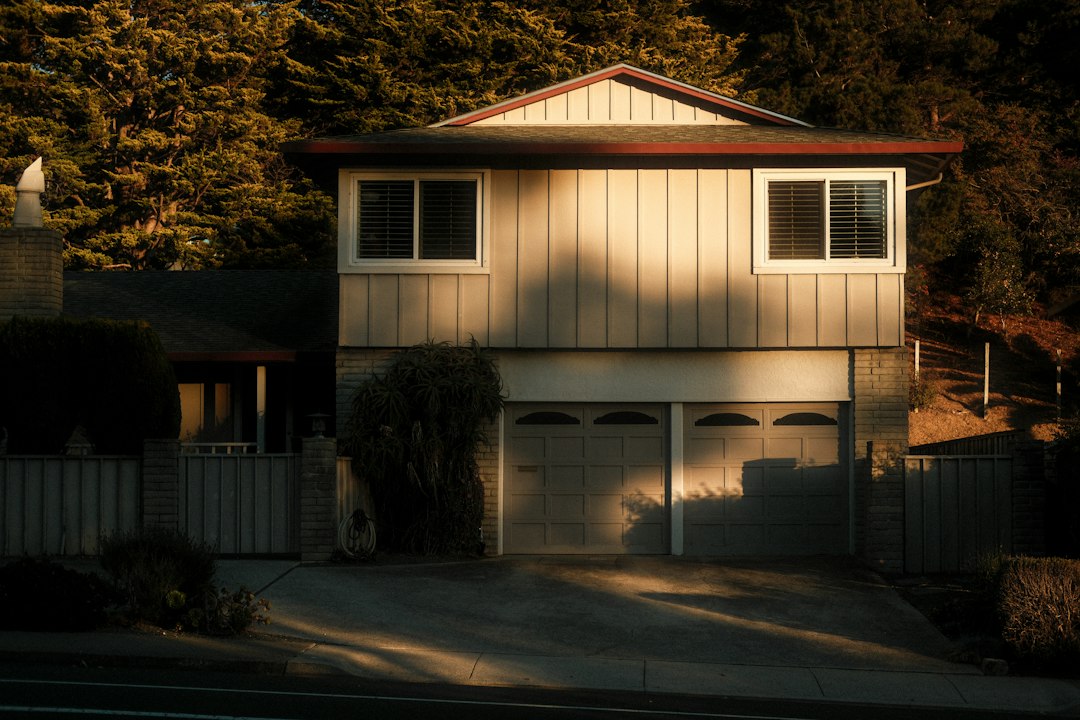
House hacking means buying a property you live in and renting out part of it, such as the other units of a duplex, a basement apartment, or spare bedrooms, so the rent covers some or all of your housing payment. Because you live there, you can usually finance it with owner-occupant loans that need far less down than an investment property loan.
For a beginner, it’s one of the few ways to get into rental real estate with a small down payment and learn landlording with your own home as the classroom. It’s not free money, though. In 2026, with 30-year rates averaging above 7% in Freddie Mac’s weekly survey, the math is tighter than the “live for free” stories suggest. This guide covers the loan options and their real rules, a worked duplex example, the FHA self-sufficiency test for three- and four-unit properties, and when house hacking is the wrong choice.
How House Hacking Works
The idea is simple: the rent from the parts of the property you don’t live in offsets your mortgage, taxes, and insurance. The common formats:
- Small multifamily (2–4 units). Live in one unit, rent the others. This is the classic house hack and the one owner-occupant loans are built for.
- Single-family with an accessory unit. A basement apartment, garage conversion, or backyard ADU, where local zoning allows it.
- Rent by the room. Rent bedrooms in a single-family home to housemates. Cheaper to buy into, but you share your living space.
- Live-in flip or live-in rental. Live in a property while you renovate it, then rent the whole thing when you move to your next house hack.
The owner-occupant loan is the engine. Investment property loans usually require larger down payments and often carry higher rates, while loans for a primary residence can go as low as 0% to 5% down, depending on the program.
Loan Options for House Hacking in 2026
| Program | Minimum down payment | Units | Occupancy requirement | Key catch |
|---|---|---|---|---|
| FHA | As low as 3.5% | 1–4 | Move in within 60 days, intend to live there at least one year | Mortgage insurance; self-sufficiency test on 3–4 units |
| Conventional (Fannie Mae) | 5% on 2–4 units (DU loans) | 1–4 | Primary residence | Private mortgage insurance; stricter credit |
| VA | 0% if price doesn’t exceed appraised value | 1–4 | Must live in the home | Only for eligible service members, veterans, and some surviving spouses |
| USDA | 0% in eligible rural areas | Generally single-family | Primary residence | Income and location limits; not built for multifamily |
Details behind each:
- FHA. HUD says an FHA down payment can be as low as 3.5% of the purchase price. Lenders generally look for a credit score of 580 or higher for that minimum, and many set their own higher floors. HUD’s Single Family Housing Policy Handbook 4000.1 requires at least one borrower to occupy the property within 60 days of signing the security instrument and intend to continue occupancy for at least one year. FHA loans carry an upfront mortgage insurance premium of 1.75% of the base loan and an annual premium; most borrowers pay 0.55% a year for loans endorsed on or after March 20, 2023.
- FHA loan limits. For 2026, HUD’s loan limits start at $541,287 for one unit, $693,050 for two units, $837,700 for three units, and $1,041,125 for four units in lower-cost areas, and go up to $2,402,625 for four units in the highest-cost areas. Your county’s limit is what matters.
- Conventional 5% down on 2–4 units. Fannie Mae’s Desktop Underwriter began allowing up to 95% loan-to-value on two- to four-unit principal residence purchases the weekend of November 18, 2023, as HousingWire reported. Before that, the cap was 85% for two units and 75% for three and four. The change doesn’t apply to high-balance or manually underwritten loans.
- VA. The VA says its purchase loan can be used to buy a home of up to four units, with no down payment as long as the sales price isn’t higher than the appraised value, and you must live in the home.
Occupancy is not a formality. Telling a lender you’ll live in a property you plan to rent out entirely is occupancy fraud. Buy the house hack you’ll actually live in.
Worked Example: An FHA Duplex
All figures are hypothetical and chosen to show the math.
You buy a duplex for $400,000 with an FHA loan:
- Down payment (3.5%): $14,000, plus closing costs
- Base loan: $386,000; with the 1.75% upfront premium financed, the loan is about $392,755
- Principal and interest at a hypothetical 7.0% over 30 years: about $2,613 a month
- Annual mortgage insurance at 0.55%: about $177 a month
- Property taxes (hypothetical): $400 a month
- Insurance (hypothetical): $150 a month
- Total monthly payment (PITI + MIP): about $3,340
You live in one unit and rent the other for $1,900 a month.
| Line | Monthly |
|---|---|
| Total housing payment | $3,340 |
| Rent from the other unit | −$1,900 |
| Reserve for vacancy, repairs, and capital items on the rental unit (hypothetical) | +$300 |
| Your effective housing cost | about $1,740 |
If a comparable unit in the area rents for $1,900, you’re living for about $160 a month less than renting it, and you’re building equity and landlord experience. That’s a real benefit, but it’s not “living for free.” The deal gets much better if you buy below market, rents rise over time, or you move out after a year and rent your unit too.
When you move out, run the property as a full rental. Using the hypothetical $1,900 for each unit, gross rent would be $3,800 against a $3,340 payment, before vacancy, repairs, capital reserves, and management. That’s thin. Run it through the cash-on-cash return calculator with realistic expenses before you assume the property will cash flow as a pure rental. Our guide to cash on cash return explains the expense lines to include. If you would rather buy a rental that is already renovated and leased, our guide to auditing a turnkey rental shows which of those lines providers most often understate.
What credit score does FHA need?
FHA’s floor comes from a 2010 HUD rule: borrowers with a minimum decision credit score of 580 or higher are eligible for maximum financing, and scores from 500 to 579 are limited to 90% loan-to-value, per Mortgagee Letter 2010-29. Below 500 isn’t eligible. A newer letter, Mortgagee Letter 2026-11, lets lenders use FICO 10T and VantageScore 4.0 alongside Classic FICO for case numbers assigned on or after January 1, 2027, but HUD says the score thresholds themselves don’t change. Individual lenders often set stricter minimums (“overlays”), so shop more than one.
A Second Example: Renting by the Room
Small multifamily isn’t the only format. Here’s a hypothetical rent-by-the-room house hack on a four-bedroom single-family home bought for $320,000 with 5% down on a conventional loan:
| Line | Monthly |
|---|---|
| Principal and interest on a $304,000 loan at a hypothetical 7.25% | about $2,074 |
| Taxes, insurance, and private mortgage insurance (hypothetical) | about $650 |
| Utilities and internet you include in rent (hypothetical) | about $350 |
| Total cost | about $3,074 |
| Rent from three bedrooms at $850 each | −$2,550 |
| Your effective housing cost | about $524 before repairs and turnover |
The rent per square foot is often higher than renting whole units, and single-family homes are easier to resell. The trade-offs are real: you share a kitchen with tenants, turnover is more frequent, and some cities cap the number of unrelated occupants. Check local occupancy and rental registration rules before you buy.
House Hacking vs. Buying a Rental Outright
| Factor | House hack | Traditional rental purchase |
|---|---|---|
| Typical down payment | 0%–5% on owner-occupant programs | Often 20%–25% on investment loans |
| Interest rate | Owner-occupant pricing | Usually priced higher for investment property |
| Your involvement | You live on site | Can be hands-off with a manager |
| Lifestyle cost | Shared walls, tenant contact | None at home |
| Speed to scale | One purchase per move | Limited by cash and lending |
| Learning curve | Built-in, with you on site | Steeper if you’re remote |
For many beginners, the house hack is the cheaper first step, and a rental bought with investment financing, or through the BRRRR method, is the second.
The FHA Self-Sufficiency Test for 3–4 Units
FHA adds a hurdle for three- and four-unit properties: the property generally has to be “self-sufficient.” In simple terms, the lender takes the appraiser’s estimate of market rent for all units, including the one you’ll live in, applies a vacancy factor (generally 25%, or the appraiser’s figure if higher), and compares the result with the full monthly payment, including principal, interest, taxes, insurance, mortgage insurance, and any HOA dues. If net rental income is less than that payment, the loan generally doesn’t qualify. Duplexes aren’t subject to the test.
Here’s how it plays out on a hypothetical fourplex:
- Price: $640,000; FHA down payment 3.5% ($22,400)
- Total monthly payment at a hypothetical 7.0% with MIP, taxes ($640), and insurance ($250): about $5,354
- Market rent: four units × $1,500 = $6,000; 75% counted = $4,500
- Result: fails. $4,500 is less than $5,354.
To pass, the four units would need roughly $7,139 a month in total market rent ($5,354 ÷ 0.75), about $1,785 per unit. That’s why FHA fourplexes in many expensive markets don’t qualify, and why some buyers use a conventional loan instead; Fannie Mae’s 2–4 unit program doesn’t use FHA’s self-sufficiency test. Ask your lender to run the test early, before you spend money on inspections.
Step by Step: How to Find and Buy a House Hack
- Get pre-approved for the right loan. Tell the lender you plan to house hack. Ask how they treat projected rental income and whether they’ll count it toward qualifying.
- Set your buy box. Neighborhoods you’d actually live in, unit count, maximum price, and the minimum rent per unit the numbers need.
- Check zoning and rental rules. Confirm the units are legal. An unpermitted basement apartment can’t be counted the same way, may not be insurable as a rental, and can draw code enforcement.
- Pull rent comps. Use leased rents for similar units, not asking rents.
- Underwrite both phases. Your cost while living there, and the property’s cash flow after you move out.
- Inspect carefully. Older small multifamily often has shared systems, deferred maintenance, and tenant-caused wear.
- Review existing leases. If you’re buying a tenant-occupied property, you generally take it subject to existing leases. Make sure you can legally move into a unit, and know your state’s notice rules.
- Set up as a landlord. Written leases, screening criteria applied consistently under fair housing law, a separate account for rents and expenses, and a reserve fund.
Taxes When You Rent Part of Your Home
Renting out part of the property you live in changes your taxes. The IRS covers this in Publication 527 under renting part of a property: you generally report the rent as income, divide shared expenses such as mortgage interest, taxes, and insurance between the rented part and your personal part, and may depreciate the rented portion. Keep clean records from day one, and talk with a tax professional before your first return as a landlord.
When House Hacking Is the Wrong Move
House hacking is powerful, but it’s a lifestyle choice as much as an investment. Skip it, or wait, if:
- You won’t enjoy living next to your tenants. Late-night noise, maintenance calls, and awkward conversations come to your door.
- The numbers only work on the best-case rent. If the property can’t carry its payment as a full rental, it could trap you when you want to move.
- You’d stretch your reserves to zero. A low down payment still needs cash for closing costs, repairs, and months of vacancy. Many first-time landlords get hurt by a furnace or a turnover, not the purchase.
- You need flexibility. Occupancy requirements and transaction costs make house hacking a bad fit if you may relocate within a year.
- Local rules work against you. Rent control, rental registration, or ADU restrictions in some cities change the economics.
- The property needs a major rehab you can’t fund. Living in a construction zone with tenants next door is hard, and FHA appraisals can require repairs before closing. If the building needs a roof, systems, or structural work, price that in or keep looking.
If several of these apply, renting a modest place and saving for a larger down payment on a pure rental can be the smarter path.
House Hacking FAQ
Can you house hack with an FHA loan?
Yes. FHA allows one- to four-unit properties if you live in one unit. Three- and four-unit properties generally have to pass the self-sufficiency test.
How long do I have to live in a house hack?
For FHA, the borrower must move in within 60 days of signing and intend to live there at least one year. Conventional and VA loans have their own owner-occupancy rules. After that, you can generally move out and keep the property as a rental.
Can I count future rent to qualify for the loan?
Often, yes, at least partly. Lenders have specific rules about how much projected rent from the other units can count. Ask your lender before you shop.
Is rent-by-the-room house hacking a good idea?
It can produce the highest rent per square foot, but you share your home. Check local occupancy limits and know that fair housing rules may apply differently when you share living space; ask a local attorney if unsure.
Can I house hack more than once?
Many investors repeat it every year or two. Lenders look at whether each new purchase is a genuine primary residence. FHA generally limits borrowers to one FHA-insured mortgage at a time, with limited exceptions such as a job relocation that makes commuting impractical, a household that has outgrown the current home, or vacating a home owned jointly with a former co-owner. Many repeat house hackers use FHA for the first property and a conventional or VA loan for the next.
What’s the best property type for a first house hack?
For most beginners, a duplex or triplex in a neighborhood you’d happily live in is the simplest start. Duplexes skip FHA’s self-sufficiency test, have fewer tenants to manage, and are easier to resell than larger buildings. A fourplex spreads vacancy risk across more units but is harder to qualify for and has more turnover to handle while you’re learning.
Is house hacking better than wholesaling?
They’re different tools. Wholesaling earns transaction fees and builds deal-finding skills; house hacking builds a long-term rental with your own housing payment. Many investors use wholesaling part time to build cash and skills, then house hack, then BRRRR.
If you’re weighing low-cash paths into real estate, compare this with our guide on how to buy a house with no money.
Grow from your first property
Know your numbers before you move in
Grab the free starter kit: a deal analyzer that runs rent, payment, and cash flow, starter contracts, a seller script for off-market small multifamily, and a buyer’s list checklist for when you’re ready to wholesale too.