
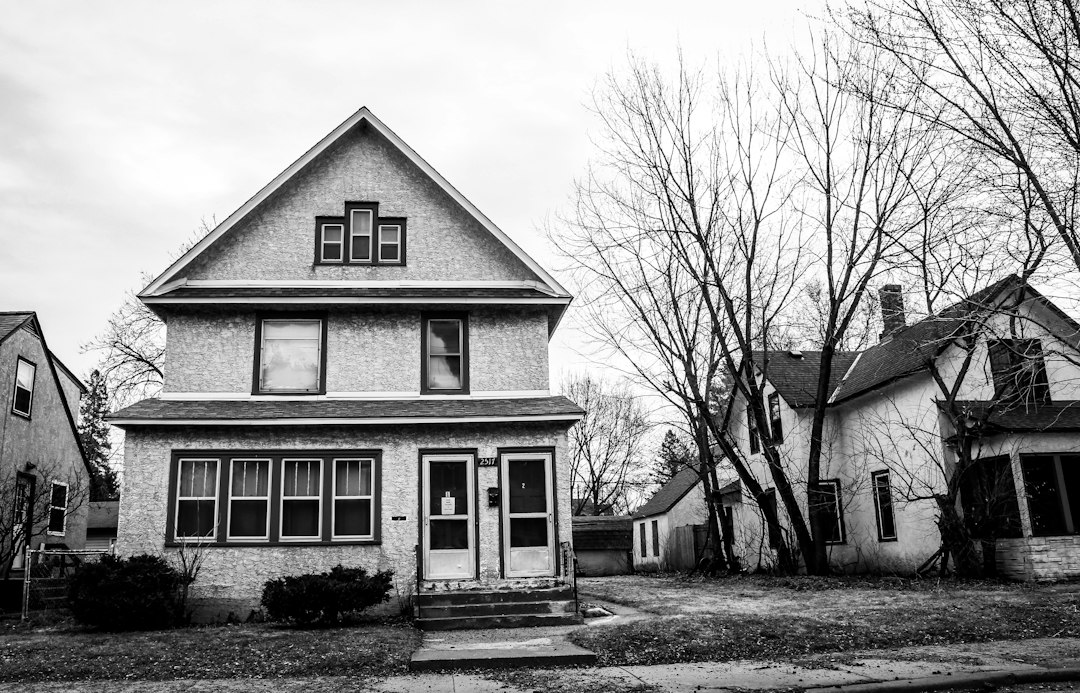
The Minnesota foreclosure process is usually nonjudicial: most lenders foreclose “by advertisement,” publishing notice for six weeks and selling the property at a sheriff’s sale without filing a lawsuit. What makes Minnesota different for investors is what happens after the sale, because the owner typically keeps a six-month redemption period, still lives in the house, and can still sell it.
That post-sale window changes how you find, price, and close distressed deals in Minneapolis, St. Paul, Duluth, and Rochester. This guide walks through each stage, the statutes behind it, and the specific state rules that trip up investors who learned foreclosure investing somewhere else. For the state’s rules on wholesale transactions themselves, start with our Minnesota wholesaling guide.
The Minnesota foreclosure process at a glance
| Stage | What happens | Statute or rule | Investor angle |
|---|---|---|---|
| Delinquency | Borrower misses payments; servicer pursues loss mitigation | 12 CFR 1024.41 | Not public yet; owners reached through broad marketing |
| Counseling notice | Lender must tell owner-occupants about foreclosure prevention counseling | Minn. Stat. 580.021 | Owner is about to enter the public process |
| Notice of pendency and sale notice | Notice recorded; six weeks of published notice; occupant served | Minn. Stat. 580.03 | Public record; the main lead signal |
| Reinstatement window | Owner can cure the default any time before the sale | Minn. Stat. 580.30 | Owner has real options; respect them |
| Optional postponement | Homestead owner can push the sale back five months in exchange for a five-week redemption | Minn. Stat. 580.07 | Changes your timeline completely |
| Sheriff’s sale | Property sold; buyer receives a sheriff’s certificate | Chapter 580 | Lender usually bids in the debt |
| Redemption period | Usually six months; sometimes 12 months or five weeks | Minn. Stat. 580.23, 582.032 | The owner can still sell; this is the distinctive investor window |
| Expiration | Certificate holder’s title becomes absolute; possession follows | Chapter 580 | Occupied homes may require an eviction |
Two paths: foreclosure by advertisement and foreclosure by action
Minnesota law has two foreclosure routes. Chapter 580 governs foreclosure by advertisement, which is available when the mortgage contains a power of sale, and that covers most residential mortgages. Chapter 581 governs foreclosure by action, a court case that lenders use when the paperwork has defects, when they want a deficiency judgment that advertisement would not allow, or when title issues need a judge to sort out.
Stage 1: Delinquency and the 120-day federal rule
Federal servicing rules set the first guardrail in every state. Under Regulation X, a servicer generally cannot make the first notice or filing required for a judicial or nonjudicial foreclosure until the borrower’s mortgage obligation is more than 120 days delinquent (12 CFR 1024.41). During those four months, the homeowner is usually hearing about repayment plans, forbearance, and modifications.
Minnesota adds a state-specific step. For owner-occupied homes with one to four units, the foreclosing party must, before recording its notice of pendency, tell the homeowner that foreclosure prevention counseling is available and that it will pass the homeowner’s contact details to an approved counseling agency (Minn. Stat. 580.021). The lender then has to send that information to the agency within a week.
For investors, that means a Minnesota homeowner in foreclosure has often already spoken to a nonprofit counselor before you ever reach them. That is a good thing. Owners who understand their options make faster, clearer decisions, and you are far less likely to be accused of pushing someone into a sale. Marketing before the public filing relies on broader lists, which we cover in our guide to pre-foreclosure and tax-delinquent leads.
Stage 2: Notice of pendency and the six-week publication
The public part of the process starts when the foreclosing party records a notice of pendency and begins publishing the notice of mortgage foreclosure sale. Minnesota requires six weeks’ published notice, and at least four weeks before the sale a copy must be served on the person in possession if the property is occupied (Minn. Stat. 580.03). The same statute requires the additional notices in sections 580.041 and 580.042 to be served at the same time, so the occupant receives the foreclosure notice and the state-mandated homeowner notices in one package.
Stage 3: Reinstatement before the sheriff’s sale
Until the sale happens, the homeowner can stop the foreclosure by curing the default rather than paying off the whole loan. Under Minn. Stat. 580.30, the mortgage is fully reinstated if the owner, a junior lienholder, or anyone on their behalf pays the amount actually in default when the foreclosure started, plus insurance, delinquent taxes, interest to the payment date, publication and service costs, and attorney’s fees capped at the greater of $150 or half of the fees allowed under section 582.01.
The statute also tells you how reinstatement quotes work. The lender must give the borrower the reinstatement figure within three days of a request, and that figure is good for seven days or until the sale, whichever comes first. A request made less than three days before the sale does not oblige the lender to postpone.
Why this matters to you: an owner with modest arrears and decent equity may be better served by reinstating than by selling to an investor. If you are buying subject to the existing loan or structuring a creative deal, the reinstatement figure, not the full payoff, is the number that stops the sale. Get it in writing, and have a closing agent confirm it directly with the foreclosing attorney. Our guide to reading a mortgage payoff statement explains how to check those figures line by line.
Stage 4: The postponement trade-off most investors miss
Minnesota gives homestead owners an unusual choice. If the property is classified as homestead and has one to four units, the owner can postpone the sheriff’s sale by five months, or by 11 months when the redemption period would be 12 months. In exchange, the redemption period shrinks to five weeks (Minn. Stat. 580.07).
To use it, the owner signs a sworn affidavit in the statutory form, records it with the county recorder or registrar of titles, and files a recorded copy with the sheriff and the foreclosing attorney at least 15 days before the scheduled sale. The option can be used only once per foreclosure proceeding, and the shortened redemption applies only to that foreclosure.
The total time the owner keeps the house is similar either way, but where that time sits is very different:
| Scenario | Time before the sale | Redemption after the sale | What it means for a buyer |
|---|---|---|---|
| Standard six-month redemption | Through the original sale date | Six months | Owner can sell during redemption; you pay off the sheriff’s certificate holder |
| Owner postpones under 580.07 | Five extra months before the sale | Five weeks | The deal must close before the postponed sale, or very quickly after it |
If you are tracking a property and the sale date suddenly jumps five months, check the county records for a recorded postponement affidavit. If one is there, your realistic closing window is before that new sale date. Waiting until “after the sale, during redemption” leaves you with five weeks, which is not enough time for most title, funding, and buyer-assignment work.
Stage 5: The sheriff’s sale and the certificate of sale
The county sheriff conducts the sale at the time and place in the published notice. In most residential foreclosures, the lender bids the amount it is owed, and few third parties bid, because the buyer does not get possession or final title on sale day. The buyer receives a sheriff’s certificate of sale, which becomes absolute title only if the redemption period expires without redemption.
Hennepin County’s sheriff explains that once a sale is processed, the successful bidder must pick up the sheriff’s certificate and file it with the county recorder, and that redemptions can be completed with the sheriff’s office or with the certificate holder (Hennepin County foreclosure sales). Other counties follow similar steps, but check each sheriff’s page for payment and scheduling details. Our national guide to how foreclosure auctions work covers bidding strategy and diligence.
Stage 6: Redemption periods, explained
The default rule is six months. Under Minn. Stat. 580.23, the mortgagor or their assigns may redeem within six months after the sale by paying the sale price plus interest from the sale date at the mortgage rate stated in the certificate (or six percent a year if none is stated), plus certain other allowed sums such as taxes and insurance the certificate holder paid.
The period is 12 months in specific situations listed in subdivision 2, including when the amount claimed due is less than 66-2/3 percent of the original principal, when the property exceeded 40 acres when mortgaged, certain agricultural parcels, older mortgages meeting date tests, and reverse mortgages. That first trigger is the one to watch on residential deals: a long-held loan that has been paid down substantially can carry a 12-month redemption.
The period can also be cut to five weeks for abandoned property. Section 582.032 lets the foreclosing party, certificate holder, or local government ask a court to shorten redemption on residential property of fewer than five units and ten acres or less when the home is abandoned. Evidence includes boarded windows, terminated utilities, accumulated debris, or a sheriff’s or inspector’s affidavit that the property is unoccupied. A recorded order is your signal that the window has shrunk.
| Redemption period | When it applies | Deficiency allowed after advertisement? |
|---|---|---|
| Six months | Default rule for most residential mortgages | No |
| 12 months | Amount due under 66-2/3% of original principal, large or agricultural parcels, reverse mortgages, certain older loans | Not barred by the six-month rule; check with counsel |
| Five weeks | Owner postponed the sale under 580.07, or a court found the property abandoned under 582.032 | No |
That deficiency column comes from Minn. Stat. 582.30, which bars a deficiency judgment when a mortgage is foreclosed by advertisement with a six-month or five-week redemption period. Our national explainers on the foreclosure redemption period and deficiency judgments show how unusual this combination is compared with other states.
Minnesota’s foreclosure reconveyance law: the rule that changes creative deals
This is the section to read twice if you use lease-backs, buy-back options, or contracts for deed. Minnesota’s chapter 325N regulates “equity purchasers” in property reconveyance transactions, meaning deals where a homeowner facing foreclosure transfers an interest in their home and is promised a way to stay or buy it back. The prohibited practices section, Minn. Stat. 325N.17, is strict. Among other things, an equity purchaser may not enter into a reconveyance unless they:
- Verify the owner can afford the buy-back. There is a rebuttable presumption of affordability only when housing expenses and other debt payments do not exceed 60 percent of the owner’s gross monthly income, and an owner’s own statement of income is not enough documentation.
- Close in person through an independent closing agent who is not employed by or affiliated with the investor.
- Get the owner’s written consent before granting any interest in the property while the owner still holds an interest.
- Either reconvey title or pay the owner at least 82 percent of fair market value within 150 days after the owner leaves, with a detailed written accounting.
The statute also bars representing that you are an advisor or consultant to the owner, or that you are helping them “save the house,” and bars recording documents, transferring interests, or paying the owner until the cancellation period has fully run. If you plan any structure where the seller stays in the home after closing, including a lease option or a contract for deed back to the seller, this is exactly the kind of deal that needs a Minnesota real estate attorney to review the paperwork before anyone signs. A clean cash purchase where the owner moves out is a very different transaction from a reconveyance.
Worked example: buying during the redemption period (hypothetical)
All figures are hypothetical and illustrate the math only.
A homeowner in a St. Paul suburb went through a sheriff’s sale two months ago. The lender bid its debt, and the six-month redemption period has four months left. The owner has moved in with family and wants out cleanly.
| Item | Hypothetical figure |
|---|---|
| After-repair value | $285,000 |
| Repairs | $38,000 |
| Sheriff’s sale price (lender’s bid) | $162,000 |
| Interest from sale to redemption at a 6.5% note rate, about four months | About $3,500 |
| Taxes and insurance paid by certificate holder, plus allowed costs | About $3,200 |
| Estimated redemption amount | About $168,700 |
| Investor maximum (70% of ARV minus repairs) | $161,500 |
At those numbers, the deal does not work at a standard 70 percent formula. The redemption amount alone is above the maximum offer. You could look for a buyer who accepts a thinner margin, or walk away. Run your own figures with the MAO calculator.
Change one fact: the lender bid $118,000. The redemption figure drops to roughly $124,000. You agree to pay $150,000. At closing, the title company pays the certificate holder the exact redemption amount the sheriff or certificate holder confirms, and the owner receives about $26,000 before their closing costs. Without the sale, the redemption period would have expired and that equity would have gone to the certificate holder.
Two practical notes. First, the statute requires redemption funds and documents to be delivered on business days between 9 a.m. and 4 p.m., so do not plan a closing for the final afternoon. Second, check whether any junior lienholders have filed notice of an intent to redeem, and run a full title search. Our guide on how to do a title search covers what to look for.
Where investors lose money in Minnesota foreclosures
- Treating the sheriff’s sale like a final auction. A third-party bidder gets a certificate, not a house, and may simply be paid back with interest if the owner redeems.
- Missing a shortened redemption. Investors who plan around six months and discover a five-week period lose the deal.
- Using another state’s lease-back playbook. Chapter 325N’s affordability, closing, and 82 percent rules make many out-of-state “sale-leaseback rescue” structures unworkable here.
When a Minnesota foreclosure lead is the wrong deal
The long redemption period means many Minnesota owners have time and options. An owner with substantial equity and four months left may net more by listing with an agent. An owner with small arrears may be better off reinstating. An owner who wants to keep the home long-term is usually better served by a housing counselor than by a reconveyance deal. Saying so plainly is how you earn referrals in a state where foreclosure counselors, attorneys, and sheriffs’ offices all see the same names repeatedly.
Minnesota foreclosure FAQ
Is Minnesota a judicial or nonjudicial foreclosure state?
Both routes exist, but most residential foreclosures proceed by advertisement under chapter 580, which is nonjudicial. Foreclosure by action under chapter 581 goes through district court.
How long is the redemption period in Minnesota?
Usually six months after the sheriff’s sale. It is 12 months in the situations listed in section 580.23, subdivision 2, and five weeks if the owner postponed the sale under section 580.07 or a court found the property abandoned under section 582.032.
Can a homeowner sell during the redemption period?
Yes. The owner can sell their right to redeem, and the buyer, through the closing agent, pays the redemption amount to the certificate holder or the sheriff before the period expires.
Where do I find Minnesota foreclosure notices?
Legal newspapers publish the notices of sale, county recorders hold notices of pendency and sheriff’s certificates, and county sheriffs post sale schedules. Data vendors aggregate these, but check each record against the county’s own documents before you act on it.
Wholesaling in Minnesota markets
Price redemption-period deals with confidence
Get the free starter kit with a deal analyzer that handles payoffs, redemption amounts, and back taxes, plus starter contracts, a respectful seller script for owners in foreclosure, and a buyer’s list checklist.
Related guides
Fresh from the blog
Latest wholesaling guides

Massachusetts Foreclosure Process: A Stage-by-Stage Guide for Investors
The Massachusetts foreclosure process is mostly nonjudicial: after a 90-day right-to-cure notice and a short servicemembers case, the lender can…
Read the guide
Tired Landlords: How to Find Them, What to Say, and Deals That Fit
Tired landlords are rental owners who no longer want to deal with tenants, repairs or management and will trade some…
Read the guide
SEO for Real Estate Investors: How to Rank for Motivated Seller Searches
SEO for real estate investors means getting your website in front of homeowners who search for a fast or as-is…
Read the guide
How to Calculate Price Per Square Foot (and When It Misleads)
To calculate price per square foot, divide a home's sale price by its finished, above-grade living area. The math is…
Read the guide
How to Buy an Abandoned House: Find the Owner, Clear Title, Close
To learn how to buy an abandoned house, start with the fact most guides skip: someone still owns it. You…
Read the guide
DealMachine vs PropStream: Which Is Better for Finding Deals?
DealMachine vs PropStream compared: pricing, driving for dollars, list building and which tool suits a new wholesaler.
Read the guide
PropStream vs BatchLeads: Which One Should a Wholesaler Pick?
PropStream vs BatchLeads compared for wholesalers: pricing, data, skip tracing, texting and which one fits your first deals.
Read the guide
Liquidated Damages in Real Estate: How the Clause Protects Wholesalers
Liquidated damages in real estate are a sum, usually the earnest money, that the seller keeps as full compensation if…
Read the guide
Lead-Based Paint Disclosure: What Investors Must Do Before Selling or Renting
A lead-based paint disclosure is required before a buyer or tenant is bound on any home built before 1978. Here…
Read the guide