
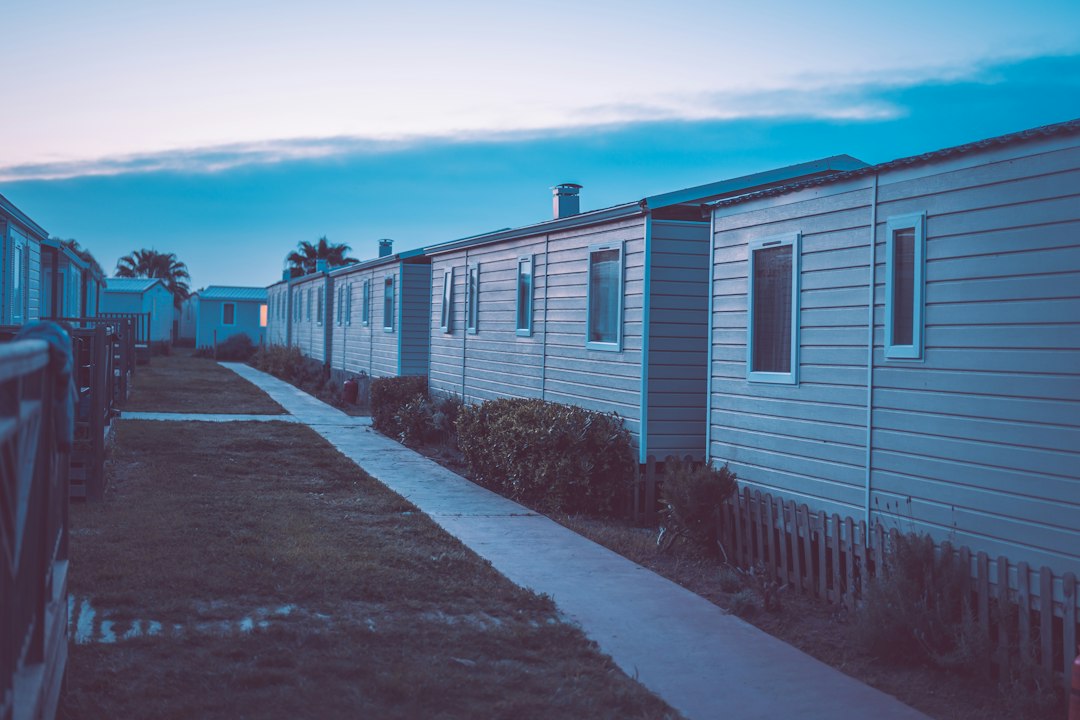
Mobile home park investing means buying the land and infrastructure of a manufactured housing community and earning income mainly by renting lots, often called pads, to residents who own their homes. Because the residents own the structures and moving a home is expensive, well-run parks tend to have low turnover and steady lot rent, which is why the asset class attracts both small investors and large institutions.
The same features that make parks attractive also make them easy to misjudge. A park is part real estate, part utility company, and part landlord business, regulated differently from apartments and financed differently from houses. This guide covers how parks make money, current market numbers with their sources, how to underwrite a small park, the due diligence items that sink beginners, and when a park is the wrong investment.
How a mobile home park makes money
Most income in a typical community comes from lot rent. The resident owns the home, pays the park monthly rent for the land it sits on, and is responsible for the home’s upkeep. The park owner maintains the roads, common areas, and usually the water and sewer lines up to each lot. Other income sources include:
- Park-owned homes. Homes the park owns and rents out, or sells to residents on payment plans. They raise income but bring apartment-style maintenance and turnover.
- Utility reimbursements. Many parks bill residents back for water, sewer, or trash, which shifts a large expense off the owner’s books.
- Fees. Late fees, application fees, storage, and laundry, which are usually small.
The core economics come from the cost of moving a home. Relocating a manufactured home often costs thousands of dollars, and many older homes cannot be moved safely at all, so residents rarely leave because of a moderate rent increase. That stability is the main reason investors pay for parks, and also the main reason regulators and resident groups scrutinize rent increases after a sale.
The mobile home park market in 2026
The figures above come from Northmarq. Its Q2 2026 manufactured housing report, published in September 2026, reported average rents up 6.4% from a year earlier, a national average cap rate of about 6.5% so far in 2026, and an average price of $62,000 per space. The same report noted that national occupancy slipped 10 basis points from the first quarter, the first quarterly decline in more than three years, and that transaction counts slowed while dollar volume stayed elevated. The community count comes from Northmarq’s investor’s guide to manufactured housing communities. Averages hide a wide range: the report describes cap rates below 5% for top-tier properties and approaching or topping 10% for weaker ones.
Two points matter for a beginner. First, national averages are driven by large, institutional-quality communities; a 30-lot park in a small town trades in a different market with different buyers. Second, a softening in occupancy after years of gains is a reminder that rent growth is not guaranteed.
Mobile home parks vs apartments
Investors coming from small multifamily often expect a park to behave like an apartment complex with cheaper units. The differences run deeper than that.
| Factor | Mobile home park (resident-owned homes) | Apartment building |
|---|---|---|
| What you rent | Land and utility connections | The whole unit |
| Turnover cost | Low; the home usually stays when the owner sells it | Paint, flooring, appliances, and vacancy between tenants |
| Interior repairs | Resident’s responsibility | Landlord’s responsibility |
| Infrastructure | Roads, water and sewer lines, sometimes private systems | Building systems: roof, plumbing, HVAC, elevators |
| Filling a vacancy | Requires a home to be bought or moved in | Clean the unit and list it |
| Regulation | Often a separate state law for manufactured housing communities | General landlord-tenant law |
The low turnover cost is the advantage. The difficulty of filling an empty lot is the drawback, and it is why occupancy matters more in a park than the headline price per space suggests.
Mobile homes vs manufactured homes
The terms are used interchangeably, but the difference matters in due diligence. Homes built since June 15, 1976 are built to the federal manufactured home construction and safety standards, known as the HUD Code, at 24 CFR Part 3280. Homes built earlier are technically mobile homes and were not built to that federal standard. A park with many pre-1976 homes may face higher repair needs, insurance and lending limits, and local rules about replacing older homes. Ask for the year of every home in the park, and treat a high share of pre-1976 homes as a cost, not a detail.
How to underwrite a small park
Parks are valued like other income property: net operating income divided by the market cap rate. If those terms are new, start with our guides to net operating income and cap rates. The park-specific work is in getting an honest NOI.
- Rebuild the rent roll yourself. List every lot, the occupant, who owns the home, the current lot rent, and payment history. Compare it to bank deposits, not just the seller’s spreadsheet.
- Separate lot income from home income. Value park-owned home rents more conservatively than lot rent, or exclude them and value the homes separately.
- Count vacant lots honestly. An empty lot with no home earns nothing. Filling it means buying and setting a home, which costs far more than leasing an empty apartment.
- Restate expenses. Small sellers often manage the park themselves and leave out management, payroll, repairs, or reserves. Add a management fee and realistic repair and capital reserves even if you plan to self-manage.
- Model the utilities. Find out whether the park pays water and sewer and whether residents are billed back. A park paying all utilities on a private system has very different economics from one on city water with full bill-back.
Worked example: a 40-lot park
All figures are hypothetical and simplified to show the method. They are not typical results or a forecast for any market.
A seller lists a 40-lot park for $1,450,000. Thirty-four lots are occupied by resident-owned homes paying $425 a month; six lots are empty. The park is on city water and sewer, and residents are billed back for water.
| Line item | Seller’s version | Your version |
|---|---|---|
| Lot rent, 34 occupied lots at $425 | $173,400 | $173,400 |
| Collection loss, 3% | Not shown | ($5,202) |
| Property taxes and insurance | ($22,000) | ($22,000) |
| Repairs and maintenance | ($6,000) | ($12,000) |
| Management, 6% of collections | Not shown | ($10,092) |
| Common-area utilities, trash, admin | ($9,000) | ($11,000) |
| Capital reserves, $100 per lot | Not shown | ($4,000) |
| Net operating income | $136,400 | $109,106 |
| Value at a 7.5% cap rate | $1,818,667 | $1,454,747 |
On the seller’s numbers the asking price looks like a bargain. On realistic numbers it is roughly market value, with no margin for surprises. The upside, if any, is in the six empty lots and in whether current lot rent is below the local market. Filling an empty lot means buying a home, transporting and setting it, and connecting utilities, then renting or selling it to a resident. If that costs $70,000 per lot and adds $425 a month of lot rent, it may make sense as part of a broader plan, but it is not free value. The cap rate you use should come from local sales of similar small parks, not from the national average. Once you have a financing quote, test the return on the cash you will actually invest with the cash-on-cash return calculator.
Park-owned homes: keep, sell, or remove?
Many small parks come with park-owned homes that the seller rents out. Each has to be judged on its own. A newer home in good condition can be sold to a resident for cash or on a payment plan, which turns a maintenance obligation into lot rent and possibly note income. An older home in poor condition may cost more to fix than it is worth and may need to be removed and replaced, which costs money and leaves the lot empty in the meantime. When you underwrite, list every park-owned home with its year, condition, and current rent, and decide in advance which ones you will sell, renovate, or remove. Do not pay lot-rent cap rates for income that comes from renting out aging homes.
Due diligence items that sink beginners
Private water and sewer systems
Many rural parks run their own wells, septic systems, or small treatment plants. Under the Safe Drinking Water Act, a system that serves at least 15 service connections or an average of at least 25 people for at least 60 days a year is a public water system, as the EPA explains. That brings testing, reporting, and operator requirements, and failures can mean expensive repairs or enforcement. Get inspection reports, testing history, and any notices of violation before you go hard on a deposit. Water and sewer line breaks in old pipe under the roads are a recurring cost even on city water.
Zoning and legal nonconforming status
Many older parks exist as legal nonconforming uses: current zoning would not allow a new park, but the existing one is grandfathered. Some local codes limit replacing homes, expanding, or rebuilding after damage. Get a zoning verification letter and read the code sections on nonconforming uses.
Home titles and abandoned homes
In many states manufactured homes are titled like vehicles, separately from the land. Abandoned homes with unclear titles, liens from chattel lenders, or homes owned by the seller personally rather than the park entity can all complicate a closing. Our guide to wholesaling mobile homes covers how home titles work.
Resident rules and state law
Many states have landlord-tenant laws written specifically for manufactured housing communities, covering lease terms, rent increase notices, rule changes, and evictions. Some states and localities add rent stabilization for parks, and some give residents notice or a chance to buy before a community is sold. Read the state statute and any local ordinance before you underwrite rent increases, and treat this as a step for a local real estate attorney.
Environmental history
Older parks may sit on land with past fuel storage or dumping. Lenders usually require a Phase I environmental site assessment, and you should order one even when paying cash.
A due diligence order of operations
- Request rent rolls, 24 months of bank statements, tax returns or profit and loss statements, utility bills, and the resident rules.
- Confirm zoning, operating permits, and any state community license.
- Inspect the infrastructure: water and sewer systems, roads, drainage, and electrical service to the lots.
- Walk every lot and record each home’s year, condition, and owner.
- Order a title search on the land and confirm title to any park-owned homes.
- Order a Phase I environmental assessment.
- Rebuild the NOI and confirm your price still works.
Put enough time in the purchase agreement or letter of intent for all of this. Thirty days is often not enough for a park with a private utility system.
Financing a mobile home park
| Source | Typical fit | Watch out for |
|---|---|---|
| Seller financing | Small, mom-and-pop parks with owners who want income | Balloon dates, and due-on-sale issues if the seller has a loan |
| Local and regional banks | Small to mid-size parks with decent records | Short terms, recourse, and personal guarantees |
| Agency (Fannie Mae and Freddie Mac) lenders | Larger, stabilized communities with professional records | Size and quality minimums, longer closing |
| Private capital or syndication | Value-add parks or multiple-park portfolios | Securities rules when raising from investors |
Seller financing is especially common with small parks, because many owners are long-term holders who want monthly income and lenders are reluctant to lend on parks with thin records. Our guide to seller financing covers how to structure terms, and our syndication guide explains the securities rules that apply if you raise money from other investors.
Finding and wholesaling park deals
Small parks are often owned by individuals who bought decades ago and are not actively selling. The same tactics wholesalers use for houses work here: county records to identify owners, direct mail, cold calls, and patience. The offer is usually a letter of intent rather than a residential purchase contract; see our guide to a real estate letter of intent. Buyers for parks are a narrower group than house flippers, so build that list before you put a park under contract. Our guide to wholesaling commercial real estate covers how the process differs from single-family deals.
When mobile home park investing is the wrong move
- The deal depends on a big rent increase. Residents have limited ability to absorb increases, state law may restrict them, and steep increases after a sale attract public and political attention.
- Most income comes from park-owned homes. That is a rental-house business with more maintenance and turnover, priced like a park.
- The infrastructure is unknown. A failing septic system or well can cost more than the down payment.
- You have no plan for management. Rent collection, rule enforcement, and repairs are ongoing work, and remote ownership without a capable manager rarely works.
- You cannot get insurance or financing on the homes. A park full of older homes can limit which lenders and insurers will work with you, and with your residents when they try to sell their homes.
- You are priced off national averages. A national cap rate says little about a 25-lot park in a town with three buyers.
Mobile home park investing FAQ
How many lots does a park need to be worth buying?
There is no fixed minimum, but very small parks may not produce enough income to pay for professional management, which pushes the work onto you. Many investors look for enough lots that a manager’s cost is a modest share of income.
What is a good cap rate for a mobile home park?
It depends on size, quality, location, and utilities. Northmarq reported a national average of about 6.5% so far in 2026, with top-tier properties below 5% and weaker ones near or above 10%. Buyers generally demand a higher cap rate for the added risk of a small rural park on private utilities than for a large community on city services, so base your number on local sales.
Is mobile home park investing passive?
Not for the owner-operator. It can be closer to passive if you invest as a limited partner in a professionally managed fund or syndication, though that brings its own risks and fees.
Do I need a license to own a mobile home park?
Some states and counties require a license or permit to operate a manufactured housing community, along with health or utility permits. Check state and local rules during due diligence.
Build your income-property skills
Underwrite income property with real numbers
Get the free starter kit: a deal analyzer you can adapt for rent rolls and expenses, starter contracts, a seller script for long-time owners, and a buyer’s list checklist so you know who buys parks in your area before you make an offer.
Related guides
Fresh from the blog
Latest wholesaling guides

Massachusetts Foreclosure Process: A Stage-by-Stage Guide for Investors
The Massachusetts foreclosure process is mostly nonjudicial: after a 90-day right-to-cure notice and a short servicemembers case, the lender can…
Read the guide
Tired Landlords: How to Find Them, What to Say, and Deals That Fit
Tired landlords are rental owners who no longer want to deal with tenants, repairs or management and will trade some…
Read the guide
SEO for Real Estate Investors: How to Rank for Motivated Seller Searches
SEO for real estate investors means getting your website in front of homeowners who search for a fast or as-is…
Read the guide
How to Calculate Price Per Square Foot (and When It Misleads)
To calculate price per square foot, divide a home's sale price by its finished, above-grade living area. The math is…
Read the guide
How to Buy an Abandoned House: Find the Owner, Clear Title, Close
To learn how to buy an abandoned house, start with the fact most guides skip: someone still owns it. You…
Read the guide
DealMachine vs PropStream: Which Is Better for Finding Deals?
DealMachine vs PropStream compared: pricing, driving for dollars, list building and which tool suits a new wholesaler.
Read the guide
PropStream vs BatchLeads: Which One Should a Wholesaler Pick?
PropStream vs BatchLeads compared for wholesalers: pricing, data, skip tracing, texting and which one fits your first deals.
Read the guide
Liquidated Damages in Real Estate: How the Clause Protects Wholesalers
Liquidated damages in real estate are a sum, usually the earnest money, that the seller keeps as full compensation if…
Read the guide
Lead-Based Paint Disclosure: What Investors Must Do Before Selling or Renting
A lead-based paint disclosure is required before a buyer or tenant is bound on any home built before 1978. Here…
Read the guide