
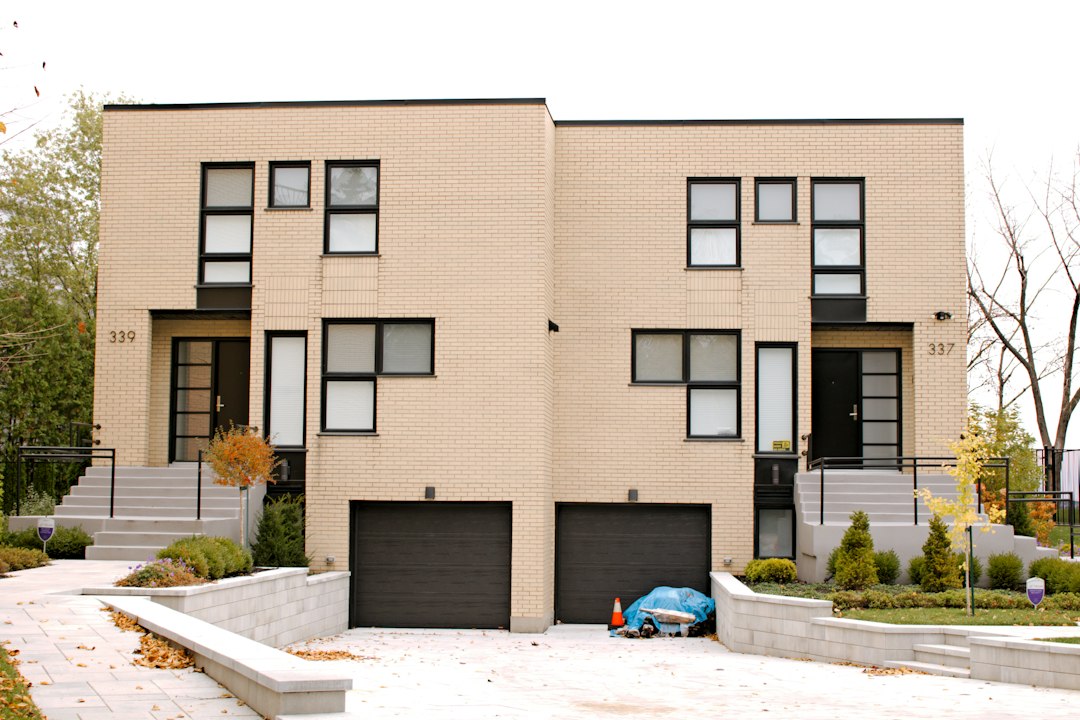
Rental property depreciation is the tax deduction that lets you recover the cost of a residential rental building over 27.5 years, even while the property may be rising in value. You deduct roughly 3.636% of the building’s cost basis each full year, never the land, starting the month the property is ready to rent.
For a buy-and-hold investor, depreciation is often the single largest deduction on Schedule E, and it is the reason many rentals show a tax loss while producing positive cash flow. It also comes with a bill at the end, through depreciation recapture when you sell. This guide shows how to calculate it step by step, how the first year works, what changed with bonus depreciation in 2025, and where investors most often get it wrong. That end-of-hold tax bill is also one reason many tired landlords hesitate to sell, even when they want out.
How rental property depreciation works
The IRS treats a rental building as an asset that wears out. Instead of deducting the purchase price in the year you buy, you spread the cost of the building over its recovery period. Under IRS Publication 527, residential rental property placed in service today is depreciated over 27.5 years under the General Depreciation System (GDS), using the straight-line method and a mid-month convention. The longer Alternative Depreciation System (ADS) uses 30 years for residential rental property placed in service after 2017 and applies only in specific situations, such as when a business elects out of the interest deduction limits.
Three rules shape every calculation:
- Land is never depreciated. Publication 527 is direct about it: land generally does not wear out, become obsolete, or get used up, so its cost is not depreciable.
- Depreciation starts when the property is placed in service. That is the date the unit is ready and available to rent, not the date a tenant moves in and not the closing date if the house needs work first.
- Improvements are depreciated separately. A new roof or a full kitchen remodel gets its own 27.5-year schedule starting the month it is placed in service.
Step 1: figure your cost basis
Your starting basis is generally what you paid for the property plus certain settlement costs. Publication 527 lists examples of costs that are added to basis, including legal and recording fees, title insurance, transfer taxes, and surveys. Costs tied to getting a loan, such as points and appraisal fees required by the lender, are generally handled differently and are not added to the property’s basis.
| Item | Hypothetical amount |
|---|---|
| Purchase price | $240,000 |
| Title insurance, recording, transfer tax, legal fees | $5,200 |
| Survey | $800 |
| Total cost basis (land plus building) | $246,000 |
If the property needed work before you could rent it, the cost of those capital improvements is added as well, either to the original basis if the work was completed before the property was placed in service, or as separate improvements afterward.
Step 2: separate the land from the building
You have to split the total basis between land and building. Publication 527 says the allocation follows each part’s share of the property’s fair market value at purchase, and that if you are unsure of those values, you can divide the cost based on the assessed values used for real estate taxes.
Suppose the county assessor values the land at $50,000 and the improvements at $200,000, a total of $250,000. The building represents 80% of the assessed total, so 80% of your $246,000 basis, or $196,800, is the depreciable basis. The remaining $49,200 is land.
The land share varies enormously by market. In expensive coastal cities, land can be half or more of the assessed value, which shrinks the deduction. In many Midwest and Southern markets, the building is the larger share. If the assessor’s split looks unrealistic, an appraisal that separately values land and improvements can support a different allocation.
Step 3: apply the 27.5-year schedule
The full-year deduction is the depreciable basis divided by 27.5, which works out to about 3.636% per year.
$196,800 divided by 27.5 equals about $7,156 per full year.
The first year and the mid-month convention
Under the mid-month convention, the IRS treats property placed in service at any point during a month as placed in service in the middle of that month. The first-year deduction is therefore smaller than a full year. The percentages below follow directly from the 27.5-year straight-line schedule and match the GDS table in Publication 527.
| Month placed in service | First-year percentage | First-year deduction on $196,800 |
|---|---|---|
| January | 3.485% | $6,858 |
| February | 3.182% | $6,262 |
| March | 2.879% | $5,665 |
| April | 2.576% | $5,069 |
| May | 2.273% | $4,473 |
| June | 1.970% | $3,876 |
| July | 1.667% | $3,280 |
| August | 1.364% | $2,684 |
| September | 1.061% | $2,087 |
| October | 0.758% | $1,491 |
| November | 0.455% | $895 |
| December | 0.152% | $298 |
From year two onward, the deduction is the full 3.636%, until a partial final year finishes the schedule. You report depreciation on Form 4562 in the year the property is placed in service, and Publication 527 lists the other situations where that form is required.
Worked example: what depreciation does to a rental’s taxes
The figures below are hypothetical and rounded. They do not describe a real property or anyone’s actual tax situation.
The same property rents for $1,900 a month and is placed in service in June.
| Item | First full year (year 2) |
|---|---|
| Gross rent ($1,900 x 12) | $22,800 |
| Mortgage interest | ($11,400) |
| Property taxes and insurance | ($4,300) |
| Repairs, management, and other expenses | ($4,100) |
| Net before depreciation | $3,000 |
| Depreciation | ($7,156) |
| Taxable result | ($4,156) loss |
The property produces positive cash flow before principal payments, yet the tax return shows a loss of about $4,156. Whether that loss can offset other income depends on the passive activity rules. Under Publication 527, if you actively participate in the rental, you may deduct up to $25,000 of rental losses against nonpassive income, but that allowance phases out between $100,000 and $150,000 of modified adjusted gross income ($50,000 to $75,000 if married filing separately). Above that range, the loss is generally suspended and carried forward. Investors who qualify for real estate professional status are treated differently.
To see how cash flow and tax effects combine, run the property through the cash-on-cash return calculator first, then layer the tax result on top.
Bonus depreciation and cost segregation after 2025
The building itself is 27.5-year property, so it does not qualify for bonus depreciation, which applies only to property with a recovery period of 20 years or less. Many parts of a rental do qualify, though: appliances, carpeting, some fixtures, and land improvements such as fencing and driveways can fall into 5-, 7-, or 15-year classes.
The One Big Beautiful Bill Act, signed in July 2025, permanently restored 100% bonus depreciation for qualified property acquired after January 19, 2025, according to analyses from Grant Thornton and the Texas Society of CPAs. Before that change, bonus depreciation had been phasing down from 100% toward zero.
That makes a cost segregation study more powerful than it was a few years ago. A study identifies the short-life components inside the purchase price and moves them out of the 27.5-year bucket, and those components may then be deducted in full in the first year. On a small single-family rental, the study fee may not be worth it; on larger or higher-priced properties, the first-year deduction can be substantial. Have a tax professional run the numbers for your situation before ordering one.
Smaller purchases: the de minimis safe harbor
Separate from bonus depreciation, the IRS tangible property regulations include a de minimis safe harbor that lets taxpayers without audited financial statements deduct qualifying purchases of up to $2,500 per invoice or item instead of capitalizing them. Publication 527 explains that, if you elect it for the year, you can deduct those amounts as rental expenses; the details are in the IRS’s tangible property regulations FAQ. A $900 refrigerator or a $1,400 water heater can often be expensed this way.
Repairs versus improvements
Repairs are deducted in full in the year paid. Improvements are capitalized and depreciated. The line between them comes from the same tangible property regulations: work that results in a betterment, a restoration, or an adaptation of the property to a new use is generally an improvement.
| Usually a repair (deduct now) | Usually an improvement (depreciate) |
|---|---|
| Patching a section of the roof | Replacing the entire roof |
| Fixing a leaking faucet | Replumbing the house |
| Repainting between tenants | Adding a bedroom or bathroom |
| Replacing a broken window pane | Replacing all windows with a new system |
| Servicing the furnace | Installing a new HVAC system |
For BRRRR investors, this distinction is where most of the planning happens. The rehab that happens before the property is placed in service is part of its basis; work afterward has to be sorted into repairs and improvements. Our BRRRR method guide walks through how the rehab, refinance, and rental phases fit together.
Adding an improvement to the schedule
Improvements get their own line on the depreciation schedule. Suppose that in year four the investor replaces the entire roof for $14,000 and the work is finished in March. The roof is depreciated as residential rental property over 27.5 years, starting in March of that year, alongside the original building schedule.
| Item | Amount |
|---|---|
| Roof cost | $14,000 |
| Full-year deduction ($14,000 / 27.5) | About $509 |
| First-year deduction (March, 2.879%) | About $403 |
| Building deduction that same year | $7,156 |
| Total depreciation in year four | About $7,559 |
Each improvement keeps its own placed-in-service date and its own adjusted basis. When the property is sold, the depreciation on every item is added together to figure the recapture, so a simple spreadsheet listing each asset, its cost, its start month, and the depreciation taken each year saves hours at tax time. If an improvement is later replaced again, the remaining basis of the old component may be deductible when it is disposed of, another reason to keep the schedule itemized rather than lumped together.
Depreciation recapture when you sell
Depreciation lowers your basis. When you sell, the gain is measured from that lower basis, and the portion of the gain attributable to depreciation on real property is taxed as unrecaptured Section 1250 gain at a maximum federal rate of 25%, according to IRS Topic 409. The rest of the gain is generally taxed at long-term capital gains rates if you held the property more than a year.
Continuing the example, suppose the investor holds the property for about ten years and has claimed about $68,000 of depreciation: $3,876 in the first partial year plus nine full years at $7,156. The building’s adjusted basis has dropped by that amount, so about $68,000 of the eventual gain is potentially subject to the 25% maximum rate.
Two points catch investors off guard:
- Allowed or allowable. The IRS reduces your basis by the depreciation you were entitled to take, whether or not you actually claimed it. Skipping depreciation does not avoid recapture; it just means you paid more tax along the way. Missed depreciation can generally be caught up through an accounting-method change filed on Form 3115, which is a job for a tax professional.
- Exchanges defer it. A properly structured 1031 exchange can defer both capital gains and recapture by rolling the basis into the replacement property.
Our full guide to depreciation recapture covers the sale-year math in detail.
Why wholesalers and flippers do not depreciate
Depreciation applies to property held for the production of income or used in a business, not to property held primarily for sale to customers. A house you wholesale or flip is treated as inventory, so there is nothing to depreciate, and the profit is generally ordinary income. The tax side of short holding periods is covered in our guide to wholesale real estate taxes.
That difference is one reason many wholesalers eventually keep some deals as rentals. A rental produces cash flow plus a depreciation deduction that can shelter part of it, while a wholesale fee is taxed as earned.
Common rental property depreciation mistakes
- Depreciating the land. Using the full purchase price inflates the deduction and invites an adjustment on audit.
- Starting on the closing date. If the property needed a rehab, depreciation starts when it was ready to rent, not when you bought it.
- Expensing a roof. A full replacement is generally an improvement; it goes on its own 27.5-year schedule.
- Forgetting improvements on the sale. Each capitalized improvement has its own schedule and its own adjusted basis that must be tracked until you sell.
- Skipping depreciation to “avoid recapture.” Because recapture is figured on depreciation allowed or allowable, skipping it only costs you the deduction.
- Ignoring the passive loss limits. A paper loss may not reduce this year’s tax bill if your income is above the phaseout range.
- Keeping poor records. Keep the closing statement, the assessor’s land and building split, and invoices for every improvement for as long as you own the property and for several years after you sell.
When depreciation should not drive the decision
Depreciation is a valuable deduction, but it is a poor reason to buy a property that does not work on its own. A rental with negative cash flow, a weak tenant base, or deferred maintenance you cannot afford will not be saved by a tax deduction, and the deduction comes back as recapture when you sell. Investors whose income is above the passive loss phaseout may not see the benefit for years. Underwrite the deal on rent, expenses, and financing first; treat depreciation as the bonus it is.
Rental property depreciation FAQ
How many years do you depreciate a rental property?
Residential rental buildings are depreciated over 27.5 years under the General Depreciation System. The Alternative Depreciation System uses 30 years for residential rental property placed in service after 2017, but it applies only in specific situations.
Can you depreciate a rental property you live in part of the year?
You can depreciate only the portion of the property used for rental and only for the period it is rented or available for rent. Mixed-use properties, such as a duplex where you live in one unit, require an allocation.
Is depreciation mandatory on rental property?
You are not forced to claim it, but the IRS reduces your basis by the depreciation allowed or allowable when you sell, so not claiming it generally costs you money.
Can I depreciate a rental property’s land?
No. Land is not depreciable. Only the building and certain improvements are.
Does bonus depreciation apply to rental houses?
Not to the building itself, which is 27.5-year property. Components with recovery periods of 20 years or less, such as appliances and certain land improvements, can qualify, and 100% bonus depreciation applies to qualified property acquired after January 19, 2025.
Plan the tax side of your deals
Underwrite the rental before the tax benefits
Get the free starter kit: a deal analyzer that checks cash flow and returns before depreciation, starter contracts, a seller script for landlords ready to sell, and a buyer’s list checklist for deals you choose not to keep.
Related guides
Fresh from the blog
Latest wholesaling guides

Massachusetts Foreclosure Process: A Stage-by-Stage Guide for Investors
The Massachusetts foreclosure process is mostly nonjudicial: after a 90-day right-to-cure notice and a short servicemembers case, the lender can…
Read the guide
Tired Landlords: How to Find Them, What to Say, and Deals That Fit
Tired landlords are rental owners who no longer want to deal with tenants, repairs or management and will trade some…
Read the guide
SEO for Real Estate Investors: How to Rank for Motivated Seller Searches
SEO for real estate investors means getting your website in front of homeowners who search for a fast or as-is…
Read the guide
How to Calculate Price Per Square Foot (and When It Misleads)
To calculate price per square foot, divide a home's sale price by its finished, above-grade living area. The math is…
Read the guide
How to Buy an Abandoned House: Find the Owner, Clear Title, Close
To learn how to buy an abandoned house, start with the fact most guides skip: someone still owns it. You…
Read the guide
DealMachine vs PropStream: Which Is Better for Finding Deals?
DealMachine vs PropStream compared: pricing, driving for dollars, list building and which tool suits a new wholesaler.
Read the guide
PropStream vs BatchLeads: Which One Should a Wholesaler Pick?
PropStream vs BatchLeads compared for wholesalers: pricing, data, skip tracing, texting and which one fits your first deals.
Read the guide
Liquidated Damages in Real Estate: How the Clause Protects Wholesalers
Liquidated damages in real estate are a sum, usually the earnest money, that the seller keeps as full compensation if…
Read the guide
Lead-Based Paint Disclosure: What Investors Must Do Before Selling or Renting
A lead-based paint disclosure is required before a buyer or tenant is bound on any home built before 1978. Here…
Read the guide