
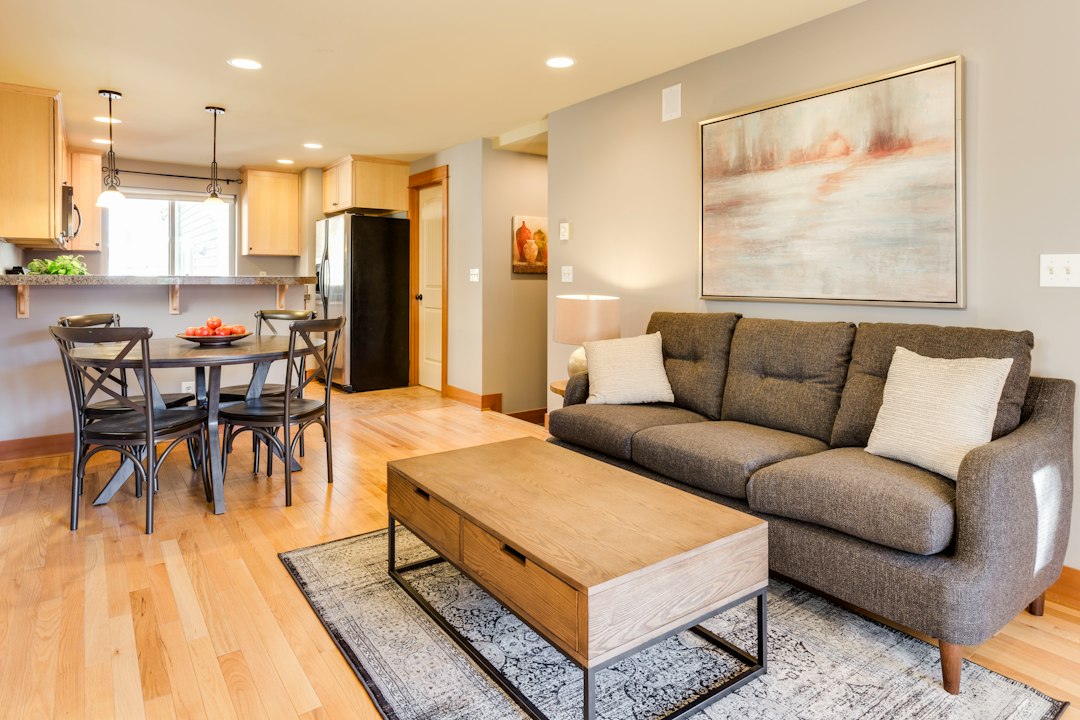
Rental arbitrage is leasing a home or apartment on a standard long-term lease and then, with the landlord’s written permission, renting it to guests by the night on platforms like Airbnb or Vrbo. Your profit is the spread between what guests pay and what you owe in rent, furnishing, cleaning, platform fees, utilities, and taxes, which means the strategy lives or dies on occupancy, local rules, and your lease.
Because you do not buy the property, the upfront cost is lower than buying a short-term rental, and it attracts many of the same people who are drawn to wholesaling. That also means you own none of the upside of appreciation and carry all of the downside of a lease you cannot easily exit. This guide covers how the numbers work, where it is restricted, how to get landlord approval, and how to tell when a unit will not pencil.
How rental arbitrage makes (or loses) money
The model has three moving parts: what guests pay per booked night, how many nights you fill, and your fixed and variable costs. Fixed costs, mainly rent, utilities, internet, and insurance, are due whether the unit is full or empty. Variable costs such as cleaning, supplies, and platform fees rise with bookings.
Occupancy is the variable that sinks most new operators. AirDNA’s 2026 midyear outlook expected U.S. short-term rental occupancy to hold at about 57.4 percent in 2026, just above the pre-COVID average of 57 percent (AirDNA, July 2026). That is a national average. A specific unit can do much better or much worse depending on location, design, reviews, pricing, and season, and a new listing with no reviews usually starts below its market.
Worked example: a two-bedroom arbitrage unit (hypothetical)
All figures are hypothetical and illustrate the math only. Build your own with local data.
| Monthly line item | Assumption | Amount |
|---|---|---|
| Gross booking revenue | $165 average nightly rate x 30.4 nights x 57% occupancy | $2,859 |
| Platform fees | Assumed 3% of revenue; fees vary by platform and fee model | -$86 |
| Cleaning | Six turnovers at $85, partly offset by guest cleaning fees | -$260 |
| Rent | Long-term lease | -$1,550 |
| Utilities and internet | Paid by operator | -$230 |
| Supplies and restocking | -$90 | |
| Short-term rental insurance | -$60 | |
| Software, pricing tools, permits (monthly share) | -$65 | |
| Maintenance and damage reserve | 5% of revenue | -$143 |
| Net monthly cash flow | $375 |
Now look at the upfront cash. Furnishing and equipping a two-bedroom unit, plus the security deposit and first month’s rent, might cost $12,000 in this example. At $375 a month, payback takes about 32 months, longer than many leases. Here is how sensitive the result is to occupancy:
| Occupancy | Gross revenue | Approximate net monthly cash flow | Annual cash-on-cash on $12,000 |
|---|---|---|---|
| 45% | $2,257 | About -$105 | Negative |
| 57% | $2,859 | About $375 | About 38% |
| 70% | $3,511 | About $895 | About 90% |
Those last returns look spectacular, which is exactly why arbitrage is heavily marketed. They depend on hitting the occupancy line every month, on rent not rising at renewal, and on the city not changing its rules. Use the cash-on-cash return calculator to stress-test a unit at lower occupancy, and read our guide to cash-on-cash return for what the metric hides.
Is rental arbitrage legal?
The strategy itself is legal when three layers of permission line up: the lease, any association rules, and local law. Missing any one of them turns a business into a lease violation or a code violation.
Layer 1: the lease
Most residential leases prohibit subletting or short-term occupancy without consent. You need explicit written permission, ideally an addendum that names short-term rental use, describes who is responsible for guest damage and noise complaints, and states what happens if the city or association changes its rules. Listing a unit without that permission is the fastest way to an eviction and a ruined rental history.
Layer 2: the HOA or building rules
Condominium and HOA declarations often restrict leases shorter than a minimum term, and the landlord’s permission does not override them. Ask for the governing documents before you sign. Our guide to deed restrictions explains how recorded covenants bind every occupant.
Layer 3: city and county rules
Local short-term rental ordinances range from simple registration to near-total bans on whole-unit rentals. New York City is the clearest example. Under Local Law 18, hosts must register with the Mayor’s Office of Special Enforcement, and hosts, whether owners or tenants, cannot rent an entire apartment or home for fewer than 30 days. A host must stay in the unit with guests and have no more than two guests (NYC311 short-term rental registration). Whole-unit arbitrage under 30 days is effectively off the table there.
Other cities require a permit per unit, limit rentals to a primary residence, cap the number of nights per year, or restrict short-term rentals to certain zones. Many also require you to collect and remit lodging or occupancy taxes. Check the city’s own code and permit page, not a blog summary, before you sign a lease, and confirm that permits can be issued to a tenant-operator rather than only an owner.
Landlord-approved programs and what they actually allow
Some landlords now welcome hosting on their terms. Airbnb launched its Airbnb-friendly apartments program in 2022 to help renters find buildings where they can host part-time in their primary residence, and Axios reported in 2024 that it had grown to more than 400 buildings across 43 markets, with partner buildings typically receiving 5 to 25 percent of booking revenue (Axios, May 2024).
Note the limit: that program is built around tenants hosting the home they live in, often with caps on nights, not operators running full-time units. It can work well as a form of house hacking. If your plan is to operate several units you do not live in, you still need a landlord willing to sign a commercial-style agreement.
How to pitch a landlord
Landlords say no to arbitrage for predictable reasons: wear and tear, liability, neighbor complaints, and fear of breaking local rules. A strong pitch addresses each one in writing:
- Show you know the rules. Bring the city’s permit requirements and how you will comply.
- Offer stronger security. A larger deposit, a longer lease term, or rent paid quarterly in advance.
- Cover liability. Carry short-term rental liability insurance that names the landlord as an additional insured.
- Promise professional cleaning and inspections after every stay, with photo reports available on request.
- Set house rules on noise, parties, parking, and guest counts, and use noise-monitoring devices that respect guest privacy.
- Consider a revenue share if rent alone does not get you to yes.
Many operators target owners of small apartment buildings or landlords with a vacant unit and a recent bad tenant experience. A guaranteed, on-time rent payment from a professional operator can be worth more to them than a slightly higher rent from an unknown tenant.
Lease terms to negotiate before you sign
| Clause | What to ask for | Why it matters |
|---|---|---|
| Permitted use | Express written permission for short-term rentals | Protects you from a lease-violation claim |
| Regulatory change | Right to terminate or convert to a standard lease if rules change | Prevents being stuck with rent and no revenue |
| Term and renewal | Long enough to recover setup costs, with capped renewal increases | Payback often takes two years or more |
| Insurance | Clear coverage requirements and additional-insured status | Reduces landlord anxiety and your risk |
| Damage and repairs | Who handles guest damage versus normal maintenance | Avoids disputes over appliances and systems |
| Assignment | Whether you can assign the lease to a successor operator | Gives you an exit if you want out |
Have a local attorney review the agreement, especially the termination and assignment clauses. Those two provisions decide how much you lose if the business does not work.
Choosing a market for arbitrage
- Regulation first. Rule out cities that bar non-owner-occupied short-term rentals or restrict permits to owners.
- Demand drivers. Hospitals, universities, business districts, and year-round attractions produce steadier bookings than a single summer season.
- Rent-to-revenue ratio. Markets where long-term rents are modest relative to nightly rates leave room for a spread.
- Supply. A neighborhood already saturated with listings forces discounts.
- Seasonality. Model your worst three months, not your average month.
Many of the same market-selection habits apply to wholesaling. Our guide to choosing a market covers how to read local data before committing.
Startup checklist
- Confirm city, county, and HOA rules in writing.
- Model the unit at low, expected, and high occupancy.
- Negotiate and sign the lease with an addendum permitting short-term rental use.
- Form a business entity if appropriate and open a separate bank account.
- Obtain the permit and register to collect lodging taxes where required.
- Buy short-term rental insurance.
- Furnish, photograph, and write the listing.
- Hire and train cleaners, and set up a backup cleaner.
- Track every booking, expense, and tax filing from day one.
Taxes, insurance, and recordkeeping
Two kinds of tax apply. The first is lodging or occupancy tax, which many states, counties, and cities charge on short stays. Some platforms collect and remit certain of these taxes automatically in some jurisdictions, but not all of them everywhere, so confirm which taxes you are responsible for filing yourself. The second is income tax on your profit. How short-term rental income is classified and reported can turn on details such as average guest stay and the services you provide, so set up your books for it from the start and review the structure with a tax professional before your first filing season.
Insurance is the other gap new operators miss. A standard renter’s policy is written for someone living in the unit, not for a business hosting paying guests, and platform host-protection programs come with their own conditions and exclusions. Buy a policy written for short-term rental operators, confirm it covers guest injuries and property damage, and keep proof of coverage ready for your landlord.
A 90-day launch plan for your first unit
- Days 1 to 15: research. Pull the city’s short-term rental ordinance, permit rules, and tax registration steps. Study comparable listings for nightly rates, minimum stays, reviews, and calendars.
- Days 16 to 30: underwrite. Model three occupancy scenarios and your worst season. Set a maximum rent you will pay and a minimum net you will accept.
- Days 31 to 50: find the landlord. Contact owners of vacant units and small buildings, present your written plan, and negotiate the lease and addendum.
- Days 51 to 70: set up. Apply for permits, bind insurance, furnish, and install smart locks and noise monitoring.
- Days 71 to 90: launch and adjust. Photograph, list, price slightly below the market to earn early reviews, and track every booking against your model.
If the unit is not tracking near your expected case after a few months, find out why before you sign a second lease. Scaling a model that does not work only multiplies the loss.
How rental arbitrage fits with a wholesaling business
Some wholesalers run one or two arbitrage units for steady income while they build a deal pipeline. Others use what they learn about short-term rental demand to serve a different buyer: investors who want properties that already work as short-term rentals. If you know which neighborhoods allow them, what nightly rates comparable homes earn, and which layouts book best, you can find and price deals for that buyer more accurately than a wholesaler who only knows long-term rents. The two models compete for your time, though. Each needs focused attention to work, so decide which one is the core business and treat the other as secondary.
Rental arbitrage vs. owning a short-term rental
| Factor | Rental arbitrage | Owning the property |
|---|---|---|
| Upfront cash | Furnishing, deposit, first month | Down payment, closing costs, furnishing |
| Appreciation and equity | None | Yours |
| Control | Limited by lease and landlord | Limited by law and HOA |
| Exit if rules change | Depends on lease terms | Can convert to long-term rental or sell |
| Main risk | Fixed rent with no revenue | Mortgage with no revenue |
Some investors use arbitrage to learn hospitality operations before buying, then move into owned units or turnkey rentals once they have data. That progression can make sense. Using arbitrage as a permanent business with no ownership is a harder path, because you are always one landlord decision away from starting over.
When rental arbitrage is the wrong move
Skip it if the city restricts whole-unit rentals, if the numbers only work at above-average occupancy, if you cannot get written landlord and HOA permission, or if you do not have reserves to cover several months of rent with no bookings. It is also a poor fit if you want a hands-off investment. Guest messaging, cleaner scheduling, reviews, and maintenance make arbitrage an operating business, and the hours are real. If your goal is to build capital for real estate deals, compare it honestly with wholesaling, which requires different skills but does not lock you into a lease.
Rental arbitrage FAQ
Is Airbnb arbitrage the same as rental arbitrage?
Yes. “Airbnb arbitrage” is the common name for rental arbitrage on that platform. The same rules apply on Vrbo, Booking.com, or direct-booking sites.
How much does it cost to start?
It depends on unit size and market, but expect to fund furniture, linens, kitchen equipment, photography, a security deposit, first month’s rent, permits, and insurance before your first booking. Plan reserves on top of that.
Do I need an LLC?
Not legally in most places, but many operators use one to separate business and personal finances. An entity does not replace proper insurance. Our guide to an LLC for real estate investing explains the trade-offs.
What happens if my city bans short-term rentals after I sign?
That depends on your lease. Without a regulatory-change clause, you may still owe rent for the full term. That single clause is often the most important one in an arbitrage lease.
Can I do rental arbitrage with a lease option?
Some operators negotiate an option to buy as part of the lease, which adds potential upside. Our guide to lease options explains how those agreements are structured.
How many units should I start with?
One. Your first unit teaches you real occupancy, cleaning costs, guest issues, and how your city enforces its rules. Use those actual numbers, not projections, to decide whether a second lease makes sense, and keep enough reserves to cover rent on every unit for several slow months.
Explore markets for short-term and long-term rentals
Run the numbers before you sign a lease
Get the free starter kit with a deal analyzer you can adapt for rental scenarios, plus starter contracts, a seller script, and a buyer’s list checklist for building your investing business.
Related guides
Fresh from the blog
Latest wholesaling guides

Massachusetts Foreclosure Process: A Stage-by-Stage Guide for Investors
The Massachusetts foreclosure process is mostly nonjudicial: after a 90-day right-to-cure notice and a short servicemembers case, the lender can…
Read the guide
Tired Landlords: How to Find Them, What to Say, and Deals That Fit
Tired landlords are rental owners who no longer want to deal with tenants, repairs or management and will trade some…
Read the guide
SEO for Real Estate Investors: How to Rank for Motivated Seller Searches
SEO for real estate investors means getting your website in front of homeowners who search for a fast or as-is…
Read the guide
How to Calculate Price Per Square Foot (and When It Misleads)
To calculate price per square foot, divide a home's sale price by its finished, above-grade living area. The math is…
Read the guide
How to Buy an Abandoned House: Find the Owner, Clear Title, Close
To learn how to buy an abandoned house, start with the fact most guides skip: someone still owns it. You…
Read the guide
DealMachine vs PropStream: Which Is Better for Finding Deals?
DealMachine vs PropStream compared: pricing, driving for dollars, list building and which tool suits a new wholesaler.
Read the guide
PropStream vs BatchLeads: Which One Should a Wholesaler Pick?
PropStream vs BatchLeads compared for wholesalers: pricing, data, skip tracing, texting and which one fits your first deals.
Read the guide
Liquidated Damages in Real Estate: How the Clause Protects Wholesalers
Liquidated damages in real estate are a sum, usually the earnest money, that the seller keeps as full compensation if…
Read the guide
Lead-Based Paint Disclosure: What Investors Must Do Before Selling or Renting
A lead-based paint disclosure is required before a buyer or tenant is bound on any home built before 1978. Here…
Read the guide