
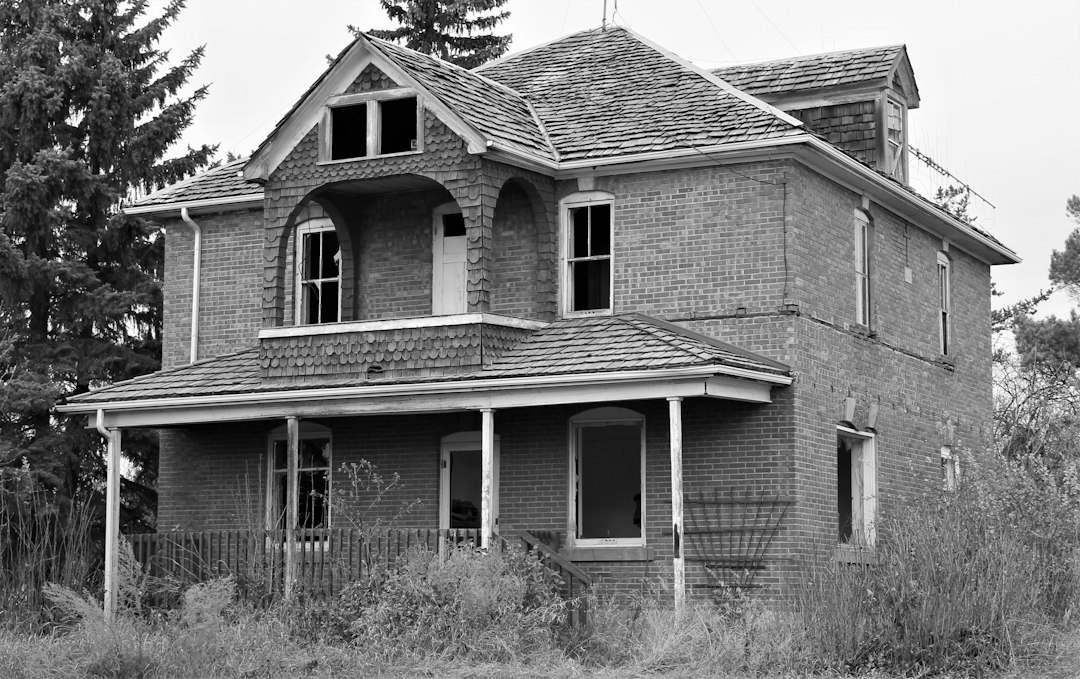
To learn how to buy an abandoned house, start with the one fact most guides skip: an abandoned house is not free, and someone still owns it. You buy it by finding that owner (or the lender, county or land bank that now controls it), confirming the title, and signing a purchase contract like any other deal.
The rest of this guide walks through that process the way an investor or wholesaler works it: how to spot real abandonment, how to trace the owner, the five legal paths to ownership, the costs that sink beginners, and a worked example with the numbers laid out.
What counts as an abandoned house
In everyday speech, “abandoned” covers any house that looks empty. Legally, almost none of them are. The owner may have died, moved out of state, walked away during a foreclosure, or simply stopped caring for a rental. Title stays with that person, their estate, or their lender until a deed, a court order, or a tax sale moves it.
That distinction matters because it decides who you negotiate with. For practical purposes, the houses investors call abandoned fall into a few groups:
- Owner-abandoned vacant homes. The owner is alive but gone, often out of state, and taxes or utilities have lapsed.
- Estate properties. The owner died and nobody has opened probate or taken charge. These overlap heavily with heirs’ property.
- Zombie foreclosures. The owner left after a foreclosure started, but the lender has not finished the sale. See our guide to zombie properties for how these get stuck.
- Bank-owned (REO) homes. The foreclosure is finished and the lender owns the house. These are vacant but not abandoned in any legal sense.
- Tax-foreclosed or land bank homes. A county or a land bank took title after years of unpaid taxes.
Vacancy itself is rarer than it looks from a car window. ATTOM’s Q3 2026 vacancy and zombie foreclosure report put the national residential vacancy rate at 1.3% of roughly 104.6 million homes. Of the 259,666 homes in pre-foreclosure that quarter, only 8,482, or 3.3%, were vacant zombie properties. Oklahoma and Kansas had the highest state vacancy rates at 2.4%, and Youngstown, Ohio led metros on zombie rate at 12.1%.
How to find abandoned houses in your market
Most of the work is identifying the right houses and confirming they are vacant without stepping onto the property. These five sources produce the most usable leads.
1. Drive or walk the neighborhood
Signs of real vacancy stack up: overgrown yards, mail or flyers piling up, boarded or broken windows, no curtains, a disconnected electric meter, notices taped to the door. One sign means little. Three or more on the same house is worth recording. Our driving for dollars guide covers how to log addresses, photos and notes in an app as you go.
2. Code enforcement and nuisance records
Cities cite vacant houses for tall grass, open structures, trash and unsafe conditions. Many publish violation data or will provide it through a public records request. A house with repeated citations and an out-of-area owner is one of the strongest abandonment signals you can find. See code violation leads for how to request and filter these lists.
3. Vacant property registries
Many cities require owners or lenders to register vacant buildings and pay an annual fee. Where a registry exists, it is a ready-made list, and lender-registered entries point you straight to zombie foreclosures. Search your city’s code enforcement pages for “vacant property registration.”
4. Utility shutoffs and returned mail
Data providers flag addresses where the U.S. Postal Service marks mail as undeliverable or vacant, and some lists track long-term water shutoffs. Treat these flags as leads to verify in person, not as proof.
5. Tax-delinquent and lis pendens filings
Owners who walked away usually stopped paying property taxes too. Cross a tax-delinquent list with absentee ownership and vacancy flags and you get a short, high-quality list. Lis pendens filings catch the zombie foreclosures earlier, before the lender takes over.
One firm rule while you search: stay off the property. Walking in through an open door is trespassing in every state, however empty the house looks, and it can also expose you to injury in a structure that may be unsafe. Look from the street and the sidewalk, and get permission before any inspection.
Find the owner before you fall in love with the house
Every path to buying an abandoned home runs through the person or entity that holds title. Here is the order investors usually work it.
- Pull the assessor record. The county assessor or tax collector lists the owner of record and the tax mailing address. This takes minutes and is free in most counties. Our guide to finding out who owns a property walks through it county by county.
- Read the recorded documents. At the recorder or register of deeds, look for the last deed, any open mortgages, liens, a lis pendens, or a recorded death certificate or affidavit of heirship.
- Skip trace the owner. If the mailing address is the vacant house itself, letters will go nowhere. Skip tracing finds current phones, emails and addresses.
- Check probate records. If the owner died, the county probate court shows whether an estate was opened and who the personal representative is. That person, not a neighbor or a cousin, is who can sign.
- Identify the lender. If a foreclosure is pending, the recorded mortgage or the foreclosure filing names the servicer. A short sale or deed in lieu may be the only way to buy before the auction.
When an owner is found, open with a simple, honest letter or call: you noticed the house, you buy homes in the area, and you would like to talk if they have thought about selling. Plenty of absentee owners are relieved to hear from someone. Keep outreach compliant with calling and texting rules, and never imply that you represent the city or the lender.
Five legal ways to buy an abandoned house
Once you know who controls the property, the buying path follows from it. This table summarizes the options.
| Path | Who you deal with | Typical timeline | Main risk |
|---|---|---|---|
| Direct purchase from the owner | Owner or heirs | 2 to 8 weeks once you reach them | Title problems from liens or missing heirs |
| Probate or estate sale | Personal representative, often with court approval | 1 to 6 months | Court confirmation rules and delays |
| Short sale or pre-foreclosure deal | Owner plus lender | 1 to 4 months | Lender approval may never come |
| REO purchase | Bank or government agency | 30 to 60 days | Competition and as-is condition |
| Tax sale or land bank | County, city or land bank | Weeks to a year or more | Redemption periods and title insurability |
Buying directly from the owner
This is the cleanest path and usually the best price. Once the owner agrees, you sign a purchase contract with an inspection period, open title with a title company, and close. Expect to pay off any delinquent taxes, liens and utility balances from the seller’s proceeds at closing.
Buying from an estate
If the owner died, the estate’s personal representative can sell once appointed. Some states require court confirmation of the sale price, and some allow independent administration without it. Heirs who disagree can stall a deal for months, so get everyone with an interest on the same page early. Our probate leads guide explains how estates are opened and who signs.
Buying before or after foreclosure
Before the auction, you can negotiate with the owner and, if the debt exceeds the value, with the lender through a short sale. After the auction, the house becomes an REO. Government-owned homes are listed through the federal government’s real estate sales directory, which links to HUD, VA and other agency inventory. Bank REOs usually reach the market through a listing agent.
Buying through a tax sale or land bank
When taxes go unpaid long enough, counties sell either a lien or the property itself, depending on the state. The rules differ sharply; see tax lien vs tax deed before you bid. Land banks are public entities that acquire vacant and tax-foreclosed homes and resell them, often to buyers who commit to rehab them within a set time. According to the Center for Community Progress national land bank map, 20 states and Puerto Rico had land bank enabling laws as of June 2026. Land bank prices can be low, but expect applications, rehab deadlines and sometimes owner-occupancy or local-buyer preferences.
What about adverse possession?
Adverse possession lets someone gain title by openly occupying land for a statutory period. Under the general elements summarized by Cornell Law School’s Legal Information Institute, possession must be actual, open and notorious, continuous, exclusive and hostile to the owner for the full statutory period. LII notes that a typical statute runs 7 years under color of title or 20 years without it, while California requires five years and New York 10. Moving into a vacant house to “claim” it is not an investment strategy. It usually means eviction, possible criminal trespass charges, and a title no lender or buyer will accept without a court judgment. Our article on squatters’ rights covers why investors should treat it as a risk, not a tool.
Title checks that protect your money
Abandoned houses carry more title baggage than ordinary listings. Before you commit real money, have a title company or real estate attorney run a full search and look for:
- Unpaid property taxes and penalties, which can include several years of interest.
- Municipal liens for demolition, board-up, grass cutting or water bills, which some cities record against the property.
- Mortgages that were never released, and second mortgages or home equity lines.
- Judgment liens and federal tax liens against the owner.
- Mechanics’ liens from abandoned repair jobs.
- Gaps in the chain of title, such as an heir who never signed off.
If you want to understand what a search turns up, read how to do a title search. When a defect cannot be fixed with a payoff or a signature, a quiet title action may be needed, which adds months and legal fees. Price that in or walk away.
A worked example: one abandoned house, three outcomes
The figures below are hypothetical and rounded to show how the math works. They are not a prediction of what any deal will produce.
A three-bedroom house has sat empty for two years. The owner moved across the country after inheriting it and stopped paying taxes. Comparable renovated homes nearby sell for around $210,000, and a contractor walkthrough puts repairs at $62,000 because of roof damage, a frozen-pipe leak and mold.
| Line item | Hypothetical figure |
|---|---|
| After-repair value (ARV) | $210,000 |
| Estimated repairs | $62,000 |
| Closing, holding and selling costs (estimate) | $24,000 |
| Target profit for a flip buyer | $30,000 |
| Most a flip buyer can pay | $94,000 |
| Delinquent taxes and city liens (paid from the seller’s proceeds) | $9,500 |
Working backward from the after-repair value, $210,000 minus repairs, costs and profit leaves about $94,000 as the most a flip buyer can pay. The $9,500 in back taxes and city liens does not disappear: it comes out of the seller’s proceeds at closing, which lowers what the owner actually walks away with and shapes how you negotiate. Run your own inputs through the ARV calculator and MAO calculator rather than relying on a rule of thumb.
Now the three outcomes:
- You buy and renovate it yourself. At an $88,000 contract price, you have about $6,000 of cushion against overruns. Mold and roof work often run over, so that cushion is thin.
- You wholesale it. If you contract at $85,000 and assign the contract to a buyer at $94,000, the $9,000 difference is your fee, before your marketing costs. The owner nets about $75,500 after the taxes and liens are paid off.
- The numbers fail. If repairs come in at $80,000 instead of $62,000, the buyer’s limit drops to $76,000 and a seller who wanted $85,000 has no deal with you. Abandoned houses fail this way often, which is why you should inspect before you rely on any estimate. Our guide to estimating repair costs covers what to check.
Costs and risks unique to vacant houses
Vacant homes deteriorate faster and cost more to hold than occupied ones. Budget for these before you sign:
- Insurance. Standard homeowner policies often limit coverage once a house has been vacant for a set period. You may need a separate vacant-dwelling policy; see vacant property insurance.
- Utility reconnection. Some utilities require inspections or permits before turning service back on in a house that has been off for months.
- Hidden water damage. Winterization often never happened. Burst pipes lead to mold, rotted subfloors and electrical damage.
- Environmental hazards. Older homes may contain lead paint or asbestos, which affect both cost and who can legally do the work.
- Squatters and theft. Copper and appliances disappear quickly. Change the locks and secure the house the day you close.
- Permits and code compliance. A house that racked up violations may need a city inspection, a certificate of occupancy, or even a demolition-order lift before it can be sold or rented.
When buying an abandoned house is the wrong move
Some abandoned houses should stay someone else’s problem. Walk away, or at least slow down, when:
- The title search shows defects you cannot price, such as an unknown heir or a lien with no payoff contact.
- The only route is a tax deed in a state where title insurers will not insure without a quiet title judgment, and you have no budget or time for one.
- Repairs are open-ended. Structural failure, foundation movement or a fire can turn a bargain into a teardown.
- The house sits in a block with many other vacant homes. Low prices there often reflect weak resale demand, and your buyer may never appear.
- You are stretching to close with money you cannot afford to have tied up for a year.
Beginners lose money on abandoned houses most often by skipping the title search, trusting a drive-by repair estimate, and underestimating holding costs. The deal that looked like a $40,000 spread on paper can end up a loss once taxes, liens and surprises are paid.
Questions about buying abandoned houses
Can I just take over an abandoned house?
No. Occupying or claiming a house you do not own is trespassing, and adverse possession requires years of open, continuous possession that meets your state’s statute. Buy it from whoever holds title.
Are abandoned houses cheaper?
Often, but not always. The purchase price may be low, yet back taxes, liens, insurance and repairs can make the total cost close to a standard listing. Judge the deal on total cost, not the contract price.
How do I find the owner if the address on file is the vacant house?
Use the deed and mortgage records for other addresses, skip tracing for current contact data, and probate records if the owner may have died.
Can I wholesale an abandoned house?
Yes, if you sign a valid contract with the owner and follow your state’s rules on disclosure and assignment. Several states now regulate wholesaling directly, so check your state guide first.
Do I need a lawyer?
For a clean direct purchase, a title company may handle closing. For estates, missing heirs, tax deeds or a quiet title action, a local real estate attorney is worth the fee.
Keep building your deal pipeline
Turn vacant houses into real offers
Our free starter kit includes the deal analyzer, starter contracts, a seller script for first conversations, and a buyer’s list checklist so you know who will take the deal.
Related guides
Fresh from the blog
Latest wholesaling guides

Massachusetts Foreclosure Process: A Stage-by-Stage Guide for Investors
The Massachusetts foreclosure process is mostly nonjudicial: after a 90-day right-to-cure notice and a short servicemembers case, the lender can…
Read the guide
Tired Landlords: How to Find Them, What to Say, and Deals That Fit
Tired landlords are rental owners who no longer want to deal with tenants, repairs or management and will trade some…
Read the guide
SEO for Real Estate Investors: How to Rank for Motivated Seller Searches
SEO for real estate investors means getting your website in front of homeowners who search for a fast or as-is…
Read the guide
How to Calculate Price Per Square Foot (and When It Misleads)
To calculate price per square foot, divide a home's sale price by its finished, above-grade living area. The math is…
Read the guide
DealMachine vs PropStream: Which Is Better for Finding Deals?
DealMachine vs PropStream compared: pricing, driving for dollars, list building and which tool suits a new wholesaler.
Read the guide
PropStream vs BatchLeads: Which One Should a Wholesaler Pick?
PropStream vs BatchLeads compared for wholesalers: pricing, data, skip tracing, texting and which one fits your first deals.
Read the guide
Liquidated Damages in Real Estate: How the Clause Protects Wholesalers
Liquidated damages in real estate are a sum, usually the earnest money, that the seller keeps as full compensation if…
Read the guide
Lead-Based Paint Disclosure: What Investors Must Do Before Selling or Renting
A lead-based paint disclosure is required before a buyer or tenant is bound on any home built before 1978. Here…
Read the guide
Chain of Title: How to Read It and Fix a Broken Chain
The chain of title is the unbroken sequence of recorded documents that moves ownership from one owner to the next.…
Read the guide